Wing Solar
Wing Solar
Wing Solar
Selected high-performance off-grid controller systems optimized for high temperature, dust resilience, and absolute compatibility with advanced battery technologies.
The Democratic Republic of Congo (DRC) hosts some of the most dynamic yet challenging energy landscapes in Sub-Saharan Africa. While national grid infrastructure managed by SNEL (Société Nationale d'Électricité) remains centralized and mostly confined to urban hubs, over 80% of the population relies on off-grid power solutions. Rural regions and intensive industrial operations—specifically in the cobalt and copper-rich Katanga belt (Lubumbashi, Kolwezi)—require decentralized energy generation that can run uninterrupted in high ambient temperatures, heavy seasonal humidity, and dusty open-pit environments.
"For commercial mini-grids and critical infrastructure, the Solar Charge Controller functions as the central nervous system. A failure in the controller halts production, exposes battery chemistry to thermal instability, and increases operation and maintenance (O&M) costs in inaccessible regions."
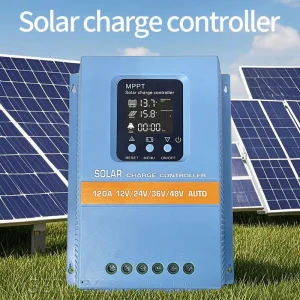
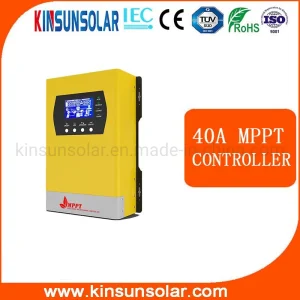
To establish long-term operational resilience, project developers must transition from cheap pulse-width modulation (PWM) units to highly intelligent Maximum Power Point Tracking (MPPT) architectures. In equatorial regions like the DRC, where atmospheric dust from mining and heavy cloud covers during the wet season fluctuate the solar irradiance, MPPT units increase system efficiency by 25% to 30%, directly minimizing the required photovoltaic panel footprint.
Analyzing global trends in controller design and their localized implementation inside DRC's harsh operational frameworks.
Standard lead-acid systems fail prematurely under deep discharges. Modern MPPT algorithms incorporate low-temperature disconnect and precise multi-stage voltage boundaries (bulk, absorption, float) custom-tailored for LiFePO4 batteries to maximize electrochemical lifespan.
At ambient temperatures above 40°C in Kinshasa or Goma, high-current chargers generate significant thermal energy. Natural convection cooling, custom fin layouts, and high-temperature derating protect internal MOSFET switchers from thermal runaway.
Infrastructure in provinces like South Kivu or Tshopo is physically remote. RS485 communication protocols integrate seamlessly with RTUs and LTE gateways, reporting operational data directly to centralized cloud SCADA systems.
In the cobalt and copper mines of Kolwezi, solar installations run heavy industrial security cameras, localized mesh networks, and environmental monitoring equipment. These sites run 24/7 and demand high-spec charge controllers. Our hardware architectures ensure absolute durability in environments featuring high suspended particulate matter (ore dust), preventing internal short-circuit hazards through conformal-coated PCBs and IP67 protected line variations.
For rural municipal programs initiated under the banner of ANSER (Agence Nationale des Services d’Électrification et des Services Énergétiques), low maintenance overhead is a critical requirement. Deploying controllers that can autonomously reset after over-load, reverse-polarity, or short-circuit events reduces the necessity for physical technical interventions, guaranteeing that remote hospitals, schools, and micro-utilities stay energized.
In close synergy with our premium charge controllers, we offer an elite lineup of solar modules tailored for residential, commercial, industrial, and utility-scale projects in extreme environments.
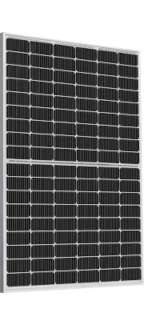
Design: Standard Mono-Facial
Dimensions: 1762 x 1134 x 30mm
Efficiency: 22.77%
Pmax Coeff: -0.29%/°C
Warranty: 30 Years Linear Power Warranty
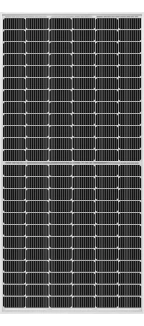
Design: Heavy Standard Industrial
Dimensions: 2279 x 1134 x 35mm
Efficiency: 22.84%
Pmax Coeff: -0.29%/°C
Warranty: 30 Years Linear Power Warranty
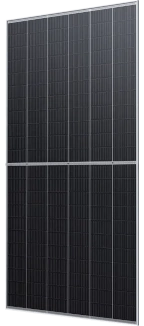
Design: Bifacial Double-Glass
Dimensions: 2384 x 1303 x 35mm
Efficiency: 22.70%
Pmax Coeff: -0.30%/°C
Warranty: 30 Years Linear Power Warranty
For nearly two decades, Wing has driven technological innovation in the solar space. By manufacturing premium-grade solar modules alongside compatible charge controller infrastructure, Wing provides high-yield solar components designed for rapid deployment. With our operational headquarters in Vienna, Austria, and major production centers globally, we ensure logistics compliance, high warranties, and bankability.
Established track record of manufacturing robust solar modules and system electronics since 2005.
Targeting 10GW by 2026 inside our state-of-the-art Industry 4.0 production facilities.
Over 6GW of solar modules and components delivered globally, offering deep supply chain expertise.
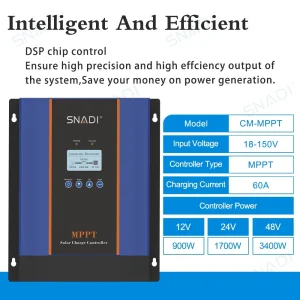
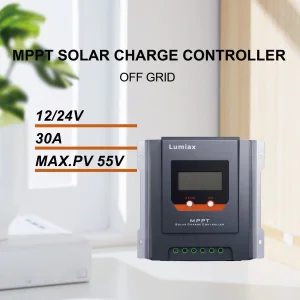
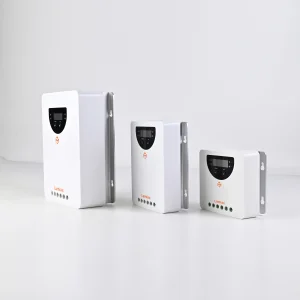
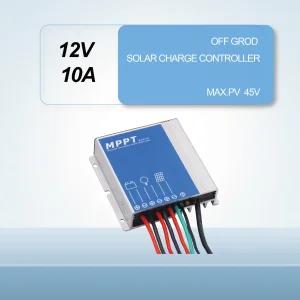
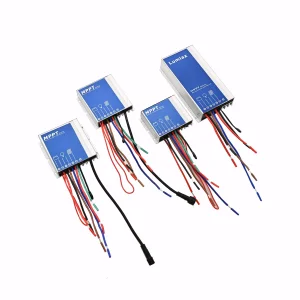
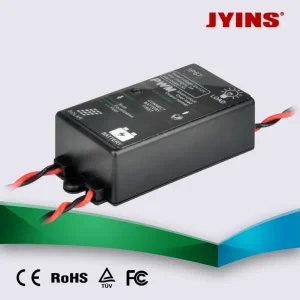
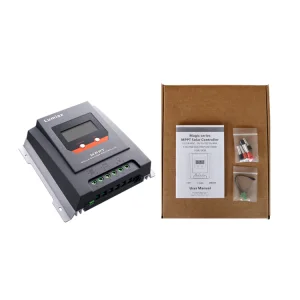
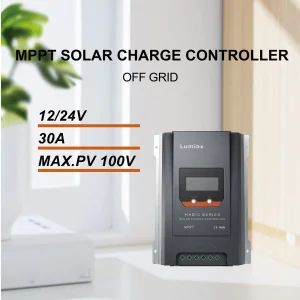
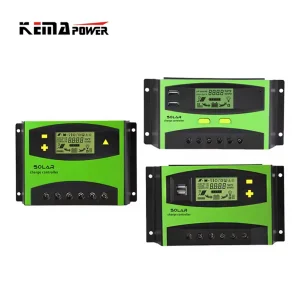
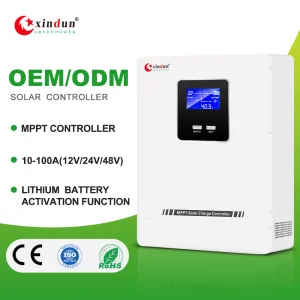
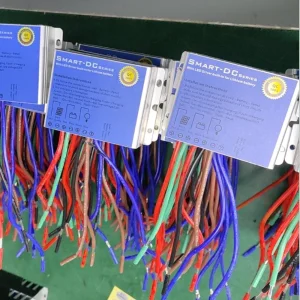
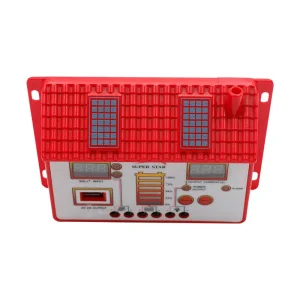
A comprehensive catalog of industrial PWM and MPPT solar regulators to support localized telecom, municipal, and hybrid power systems.
Navigating the import and certification frameworks in the Democratic Republic of Congo requires strict alignment with national administrative bodies. Every solar charge controller shipped to Kinshasa, Lubumbashi, or Goma is compliant with the standard pre-shipment inspection processes managed by the OCC (Office Congolais de Contrôle). This guarantees that parameters like insulation resistance, maximum input open-circuit voltage, and protective fuses meet strict industrial parameters before departure.
Furthermore, our close alignment with global environmental and safety directives—including CE, RoHS, and IEC 62109 standards—assures that local installation companies can build microgrids that satisfy international developmental financing organizations (like World Bank, IFC, and AfDB programs). By offering full technical data sheets, circuit schematics, and MTBF (Mean Time Between Failures) certificates, we support engineering consultants in passing rigorous government bidding evaluation gates.
Expert answers targeting the complex climatic and economic challenges faced by solar system developers in Central Africa.
In equatorial zones like the DRC, midday solar irradiance is high, but heavy cloud cover during the rainy season and dust in mining regions cause frequent fluctuations. MPPT (Maximum Power Point Tracking) controllers dynamically track the optimum operating voltage of the PV array, extracting up to 30% more power than basic PWM regulators. This improves performance under low-light or cloudy conditions and lowers the overall system cost by reducing the number of panels needed.
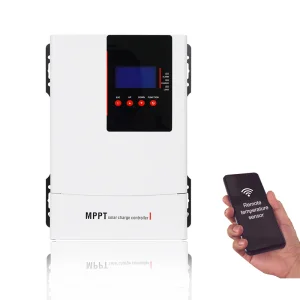
Unlike lead-acid batteries, Lithium Iron Phosphate (LiFePO4) batteries require precise voltage thresholds to prevent overcharging and thermal runaway. Our MPPT controllers feature customizable battery profiles via RS485 or Bluetooth. Users can set exact bulk, absorption, and over-voltage protection limits. In high-temperature regions, our controllers use remote temperature sensors to dynamically adjust the charge rate, preserving battery health.
For outdoor applications like street lighting in Goma or rural telecommunications towers, IP67 waterproof controllers are necessary to withstand heavy rain. Indoor or enclosure installations in dry mining areas require at least IP20 units. These controllers use conformal-coated PCBs to protect sensitive internal components from conductive copper or cobalt dust.
We provide full technical documentation to assist with imports through the Office Congolais de Contrôle (OCC). This includes CE declaration certificates, RoHS environmental compatibility reports, and detailed product manuals. We also supply test sheets with serial-tracked test outcomes, showing electrical performance and short-circuit protection features.