Wing Solar
Wing Solar
Wing Solar
Explore our wholesale-ready line of high-efficiency utility solar modules, commercial batteries, and advanced inverter setups engineered to optimize Levelized Cost of Energy (LCOE).
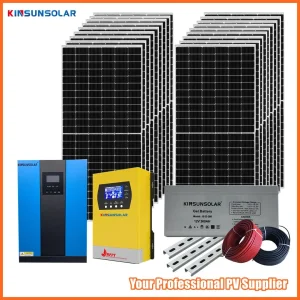
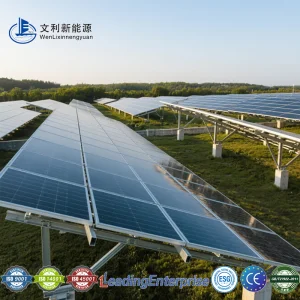
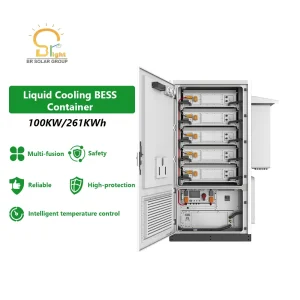
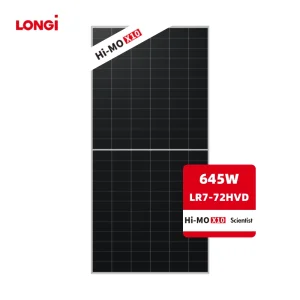
The transition from fossil-fuel baseline power to distributed variable renewable energy (VRE) has exposed structural weaknesses in global utility transmission grids. Traditional solar inverters operated under simple grid-following algorithms, injecting current synchronized with detected grid voltage. However, as penetration limits cross critical thresholds, next-generation utility projects demand Grid-Forming (GFM) capabilities, active voltage support, and advanced frequency regulation.
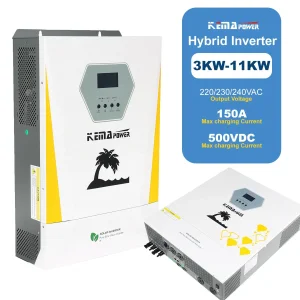
As a leading authority in wholesale distribution and direct factory exportation, we engineer and supply state-of-the-art power conversion systems. Our hybrid and string smart inverters integrate deep edge-computing functionalities that enable them to operate as Virtual Synchronous Machines (VSM). This active stabilization solves power quality degradation, harmonic distortion, and grid-unbalanced loads typical of heavy industrial zones.
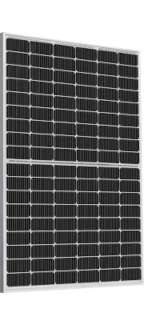
Wing’s manufacturing strength and historical reliability guarantee that our wholesale solar distribution partners receive BNEF Tier 1 tier products engineered for modern markets.
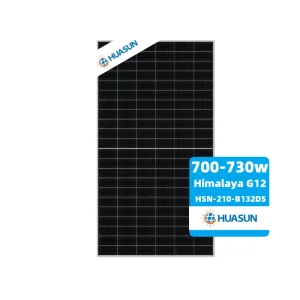
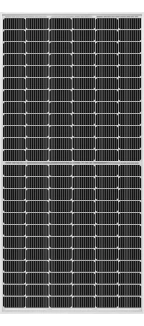
Seamlessly pair our wholesale inverter packages with the industry's highest performing N-Type solar panels for maximizing commercial, residential, and utility system returns.
High-capacity commercial and industrial applications present dynamic environments where load profile fluctuation, localized power factor parameters, and ambient thermal stresses present persistent challenges. Selecting the correct inverter topology represents the difference between a high-yield asset and chronic operational downtime.
Modern C&I rooftops feature complex orientations, localized shading, and variable pitch angles. String inverters equipped with multiple Maximum Power Point Trackers (MPPT) isolate local losses, ensuring maximum string power output even during non-ideal conditions.
Electric arc faults represent severe thermal hazards in high-voltage DC runs. Our high-capacity inverters feature embedded AI-driven Arc Fault Circuit Interrupters (AFCI) that detect signature noise frequencies on the DC line, instantly disabling the system in <200ms.
By using Modbus RTU / TCP communications alongside integrated IoT dataloggers, our commercial systems export real-time high-fidelity electrical parameters directly to cloud monitoring software for predictive O&M diagnostics.
Navigating global grid compliance requires extensive engineering documentation and conformity testing. Different continents maintain unique safety, voltage injection, and reactive power compensation profiles. System designs must adhere to strict regulatory landscapes to avoid utility rejection.
Wing’s international operations team, located in Vienna, Austria, works directly with grid operators across Europe, North America, and Australia to ensure full equipment certification. We manage the testing, verification, and localization of hardware to support quick site approvals.
A look at the technology advancements driving the next decade of commercial PV, hybrid energy storage, and smart grid integration.
Transitioning from grid-following models to true grid-forming systems that can establish voltage and frequency baselines, making black-start operations in remote regions or microgrids highly reliable.
Replacing traditional Silicon IGBTs with wide-bandgap semiconductors. This shift dramatically reduces high-frequency switching losses, enables smaller system sizes, and operates efficiently at elevated temperatures.
Using predictive thermal profiling algorithms that dynamically adjust active cooling loops based on weather forecasts, utility loading cycles, and localized component degradation patterns.
Critical answers for EPC contractors, project developers, and wholesale importers evaluating solar inverter and storage technology.
Grid-following (GFL) inverters require a stable, external grid voltage source to synchronize their output phase and frequency using Phase-Locked Loops (PLL). If the external grid goes down, the inverter shuts down. In contrast, Grid-Forming (GFM) inverters behave as a voltage source, using internal control algorithms to establish a stable reference voltage and frequency. This capability is essential for microgrids, grid black-start scenarios, and high renewable penetration zones because it mimics the rotating inertia of traditional steam or hydro turbines.
N-type cells (like TOPCon and HJT) feature virtually zero Light Induced Degradation (LID) and lower temperature coefficients (-0.29% to -0.30% / °C) compared to traditional P-type mono PERC. When paired with high-efficiency hybrid inverters, this integration yields up to 3-5% more energy output over the system's lifetime. Higher power output per module reduces BOS (Balance of System) costs like racking, cabling, and installation labor, driving down overall project LCOE.
Inverters are high-power electronics. Exceeding nominal operating temperatures triggers automatic thermal derating, where the inverter limits output power to protect its internal components. Our advanced systems employ active fan cooling coupled with smart variable-speed controllers. This configuration maintains low junction temperatures inside the power modules, preventing early component aging and ensuring continuous operation at full rated capacity up to 45°C.
European installations require CE marking, Low Voltage Directive compliance (2014/35/EU), and Electromagnetic Compatibility Directive (2014/30/EU). For grid connection, the equipment must satisfy EN 50549-1 (low-voltage connections) and EN 50549-2 (medium-voltage connections). Meeting these standards ensures the hardware supports network stability features like reactive power adjustment, active power reduction during overfrequency events, and dynamic grid support.
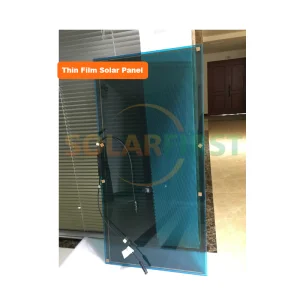
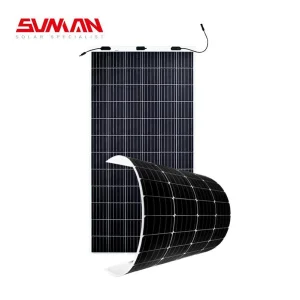
Complete your procurement requirements with our line of thin-film panels, heavy-duty tracking systems, and flexible utility-scale solutions.