Wing Solar
Wing Solar
Wing Solar
Explore our foundational equipment designed to maximize LCOE and deliver exceptional utility-grade structural integrity.
A comprehensive overview of macroeconomic drivers, technological shifts, and LCOE optimization pathways in mega-watt scale deployment.
The global energy landscape is undergoing an unprecedented transition, with utility-scale solar photovoltaics (PV) positioned as the primary catalyst. According to global energy transition reports, utility-scale deployments account for over 60% of new solar capacity added annually. As utility-scale solar factories expand their capacities globally, project developers, EPC contractors, and institutional investors are increasingly focusing on the critical factors governing Levelized Cost of Energy (LCOE), system longevity, and manufacturing bankability.
For over a decade, P-type PERC (Passivated Emitter and Rear Cell) technology was the cornerstone of solar manufacturing. However, the market has rapidly transitioned toward N-type Tunnel Oxide Passivated Contact (TOPCon) and Heterojunction (HJT) technologies. N-type silicon offers fundamental physical advantages, including near-zero Light-Induced Degradation (LID) and an improved temperature coefficient.
Utility-scale projects depend on maximizing energy yield per square meter, particularly in high-temperature environments. N-type cells achieve significantly higher bifaciality factors (often exceeding 80%) compared to their P-type predecessors. This translates directly to an increased rear-side power gain of 5% to 25% depending on the ground albedo, mitigating structural costs while boosting absolute energy throughput.
Procurement managers at multinational utility firms face volatile supply chains, shifting trade regulations, and stringent compliance standards (such as ESG and localized content requirements). Working directly with wholesale utility-scale solar factories that possess unified supply chains is no longer just a cost-saving measure; it is a vital risk management strategy.
Specifically engineered for diverse operational profiles, from residential rooftops to harsh desert utility-scale installations.
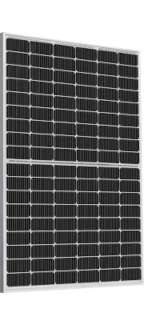
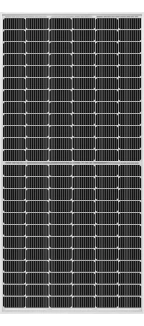
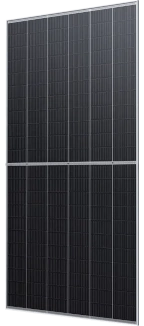
Deploying Industry 4.0 automation to deliver reliable, high-performance, and cost-effective solar modules worldwide.
Our state-of-the-art facilities rely heavily on artificial intelligence, precision automated robotics, and stringer configuration algorithms. This level of process control minimizes human error, resulting in modules with exceptional structural integrity and long-term electrical reliability.
We perform rigorous in-line quality controls, including dual Electroluminescence (EL) testing, thermal cycling, and damp-heat testing. Our products are engineered to withstand extreme wind loads (up to 5400 Pa) and heavy snow loads (up to 2400 Pa), ensuring continuous energy production for over 30 years.
Operating a global presence requires localized logistics and certification compliance. With our international headquarters established in Vienna, Austria, we provide seamless customs clearance, direct technical support, and timely delivery across Europe, the Americas, and the Asia-Pacific region.
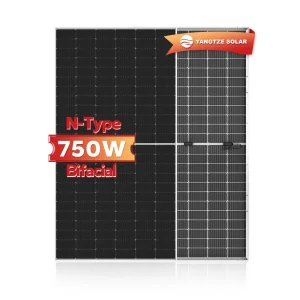
In utility-scale projects, lowering the Levelized Cost of Energy (LCOE) is the ultimate benchmark. LCOE calculation involves dividing the total lifetime cost of the solar plant (CAPEX + OPEX) by the total energy generated over its operating life. High-power, N-type bifacial modules like our 705Wp N-Type series directly target both sides of this equation.
By delivering a high nominal power output of 705Wp, developers can significantly reduce the number of modules required for a target capacity. For instance, a 100MW project utilizing 540Wp modules requires approximately 185,185 panels. Transitioning to 705Wp modules reduces the count to roughly 141,844 modules—a reduction of over 23%. This reduction directly lowers balance-of-system (BOS) costs, including racking, cabling, labor, and land footprint.
Our utility-scale modules feature a multi-busbar (MBB) half-cut cell design. By cutting the cells in half, the electrical current (I) flowing through each busbar is halved. Since resistive power loss is proportional to the square of the current ($P_{loss} = I^2R$), halving the current reduces internal resistance losses by 75%. This configuration keeps modules cooler and ensures consistent performance under high-irradiance conditions.
Unlike standard monofacial solar panels, bifacial modules collect light from both sides. Ground surface reflectivity (albedo) plays a key role in rear-side generation. Sandy soils can reflect up to 40% of ambient light, while white gravel or concrete surfaces can reflect over 60%.
Additionally, our N-type cells feature a bifaciality factor of 80% to 85%, which is significantly higher than P-type PERC panels (typically around 65% to 70%). Under real-world conditions, this increased sensitivity boosts energy yield by up to 25%, helping projects reach financial amortization much faster.
Our commitment to continuous technological innovation and expanding global manufacturing capacity.
As we expand our production capacity from 3GW to 10GW by 2026, our R&D roadmap focuses on pushing cell efficiency toward its theoretical limits. Our product development strategy centers on three key areas:
While current N-type TOPCon cells achieve production line efficiencies exceeding 25.5%, silicon-only cells are approaching their theoretical limits (around 29.4%). Our R&D team is actively developing Perovskite-Silicon tandem modules. By layering a perovskite cell—which absorbs high-energy blue light—over a silicon base that captures lower-energy red and infrared light, we aim to exceed 30% module efficiency by 2028.
Environmental sustainability is core to our corporate mission. We are actively working to eliminate lead and reduce silver consumption in our metallization pastes. Additionally, we are designing modules that are easy to recycle at the end of their lifecycle, allowing for the recovery of high-purity silicon, silver, and intact glass covers.
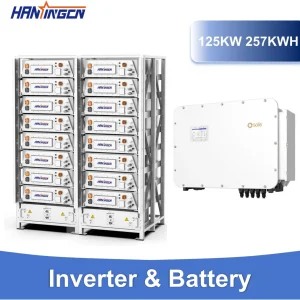
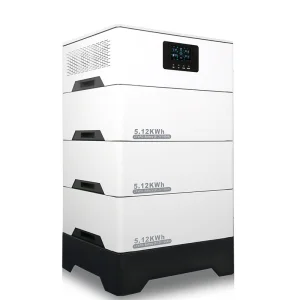
Modern utility-scale solar projects are increasingly paired with battery energy storage systems (BESS). We are developing smart, integrated modules featuring factory-installed micro-inverters and rapid-shutdown systems. This improves safety, enables module-level monitoring, and allows for dynamic grid support.
Expert insights on wholesale purchasing, technical specifications, and utility-scale deployment logistics.
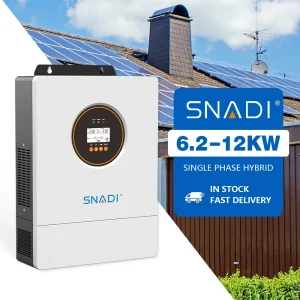
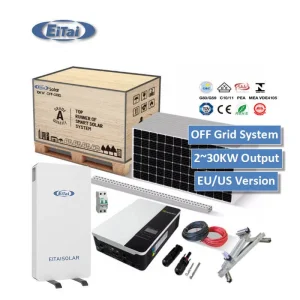
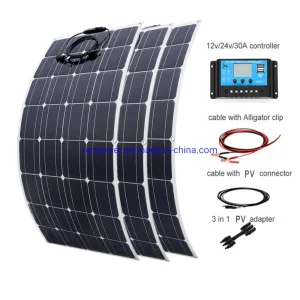
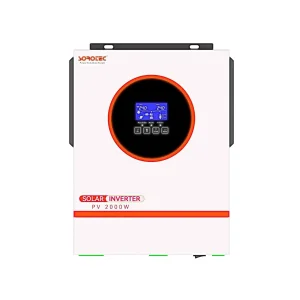
Explore our highly-durable thin-film solutions, off-grid kits, and high-capacity hybrid solar power inverters.