Wing Solar
Discover tier-1 engineered solar modules, intelligent hybrid inverters, MPPT controllers, and turn-key microgrid energy storage solutions designed for ultra-reliable mission-critical applications.
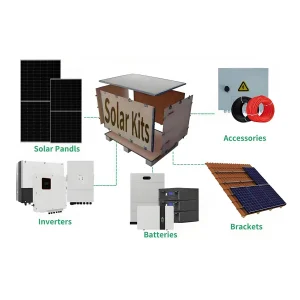
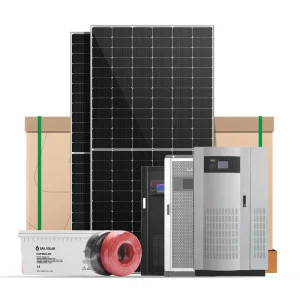

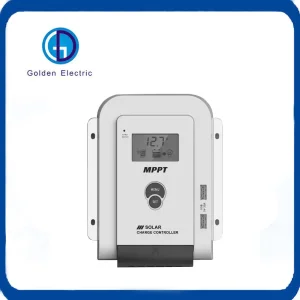
An authoritative analysis of decentralized energy architectures, hybrid storage integration, and supplier selection frameworks for global enterprise infrastructure.
Global energy security, rising grid tariffs, and severe climatic disruptions have accelerated the transition toward autonomous solar microgrids. A modern microgrid is no longer merely a emergency backup generator; it is a highly sophisticated, localized energy ecosystem combining high-efficiency photovoltaic (PV) arrays, Battery Energy Storage Systems (BESS), dual-direction hybrid inverters, and edge-AI Energy Management Systems (EMS).
By operating seamlessly in both grid-connected (grid-tied) and islanded modes, advanced solar microgrids empower commercial, industrial (C&I), and remote facilities to mitigate volatile demand charges, achieve uninterrupted power quality (UPQ), and monetize excess capacity back to regional transmission networks through Virtual Power Plants (VPP).
Evaluating enterprise-grade solar microgrids requires shifting from simple upfront Capital Expenditure (CAPEX) comparisons to holistic Levelized Cost of Energy (LCOE) and Levelized Cost of Storage (LCOS) evaluations. High-quality microgrid suppliers integrate advanced N-type cell architecture, low-degradation LFP batteries, and tier-1 power electronics that collectively lower LCOS by up to 28% over a 25-year operational lifecycle through reduced balance-of-system (BOS) losses and extended cycle longevity.
Discover Wing’s cutting-edge N-Type solar photovoltaic modules engineered specifically for residential, commercial & industrial (C&I), and utility-scale microgrid deployments.
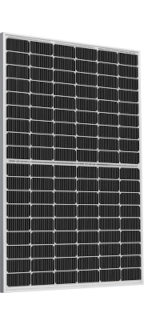
Ultra-compact high-efficiency module designed for premium rooftop microgrids and residential solar projects.
Design: Standard Black Frame
Dimensions: 1762 x 1134 x 30 mm
Module Efficiency: 22.77%
Temperature Coeff. (Pmax): -0.29%/°C
Linear Warranty: 30 Years Performance
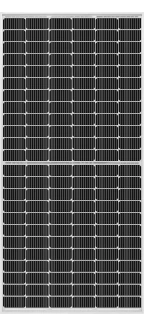
Industrial-grade high power output engineered for factory rooftops, agricultural hubs, and C&I energy storage microgrids.
Design: Standard Industrial
Dimensions: 2279 x 1134 x 35 mm
Module Efficiency: 22.84%
Temperature Coeff. (Pmax): -0.29%/°C
Linear Warranty: 30 Years Performance
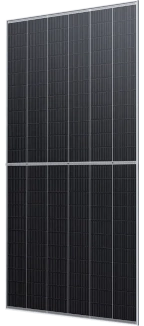
Heavy-duty bifacial double-glass module optimized for large-scale power plants, remote island grids, and mining sites.
Design: Bifacial Dual-Glass
Dimensions: 2384 x 1303 x 35 mm
Module Efficiency: 22.70%
Temperature Coeff. (Pmax): -0.30%/°C
Linear Warranty: 30 Years Performance
Our core business revolves around tech innovation, strict quality assurance, and sustainable clean energy access.
Recognized as a well-established Tier 1 PV module manufacturer by BloombergNEF (BNEF). Wing provides robust financial backing, public trading status (listed since 2023), and up to 20-25 years of product warranty and 30-year linear performance coverage.
To streamline international logistics and local engineering service support, Wing established operational headquarters in Vienna, Austria, combining Western European customer management with China's state-of-the-art Industry 4.0 manufacturing facilities.
Understanding why leading global EPC contractors, power utilities, and industrial buyers source turnkey microgrid architectures directly from China's fully integrated industrial hubs.
China hosts the world's most complete PV and energy storage supply chain. From high-purity polysilicon crystallization, silicon wafer slicing, and TOPCon cell processing to LFP battery cell chemistry, BMS development, and inverter assembly—every component is manufactured within localized industrial clusters, ensuring unparalleled quality control and cost efficiencies.
Leading Chinese suppliers deploy fully automated robotic production lines equipped with AI optical inspection (EL testing), automated stringer welding, and precise laser scribing. This automation minimizes micro-cracks, optimizes cell sorting, and ensures tight tolerance consistency across multi-megawatt shipments.
Chinese microgrid components strictly adhere to international quality standards, including IEC 61215, IEC 61730, UL 1741 SA, UL 9540A for battery fire safety, UN38.3 transport certification, and IEEE 1547 grid-interconnection compliance, guaranteeing smooth grid utility approval worldwide.
| Vector Metric | Chinese Tier-1 Factory Ecosystem | Western OEM Aggregators | Fragmented Regional Suppliers |
|---|---|---|---|
| BOS Cost Efficiency | Highest (30-40% savings via localized component integration) | Moderate (High overhead markup) | Low (Inconsistent component sourcing) |
| BESS Energy Density | High (Containerized 3.44MWh - 5MWh systems with liquid cooling) | Moderate (Air-cooled standard modules) | Low-to-Moderate |
| Customization (OEM/ODM) | Extensive (Custom voltage ranges, dual-fuel generator integration) | Limited (Rigid off-the-shelf SKUs) | High (But lacks factory validation) |
| Lead Time Flexibility | Fast (Direct access to raw cell supply lines) | Extended (Dependent on overseas imports) | Unpredictable |
Key technological breakthroughs reshaping modern decentralized energy generation and energy storage systems.
Traditional microgrid inverters operate in "grid-following" mode, relying on an active electrical grid signal to establish frequency and voltage reference. Next-generation microgrids deploy Grid-Forming Inverters equipped with virtual synchronous generator (VSG) algorithms. These systems dynamically synthesize system inertia, control voltage amplitude, and enable true "Black Start" capabilities to recover zero-voltage industrial networks during catastrophic central grid failures.
Air-cooling is rapidly giving way to direct-to-chip Liquid Cooling Thermal Management in large-scale Battery Energy Storage Systems (BESS) such as 344kWh containerized units. Liquid cooling maintains cell temperature variance within ≤2.5°C across high charge/discharge C-rates, preventing thermal runaway risks, extending battery lifecycle by over 20%, and reducing parasitic auxiliary energy consumption.
Modern C&I microgrids leverage cloud-edge AI controllers that continuously ingest real-time weather forecasts, historical factory load curves, and dynamic utility dynamic tariffs. The EMS automatically determines the optimal economic dispatch strategy: storing solar energy during low-tariff hours, peak-shaving during maximum demand charges, and preserving reserve state-of-charge (SoC) for emergency backup.
P-type PERC technology has reached its theoretical efficiency limit. The global solar industry has shifted toward N-Type TOPCon (Tunnel Oxide Passivated Contact) and HJT technologies. N-type modules deliver superior temperature performance, near-zero Light-Induced Degradation (LID), and elevated bifaciality factors (>80%), yielding up to 3-5% more kilowatt-hours per installed watt-peak.
Tailored microgrid architectural blueprints delivering optimal economic performance and energy reliability across global sectors.
Challenge: Excessive peak demand tariffs and power outage penalties during manufacturing shifts.
Architecture: Roof-mounted 590Wp N-Type arrays paired with a 100kW/344kWh LFP BESS container and 3-phase hybrid power conversion system (PCS).
Result: 35% reduction in electricity bills via peak shaving and zero downtime during grid tripping events.
Challenge: Heavy reliance on expensive diesel fuel transportation to off-grid remote locations.
Architecture: Ground-mounted 705Wp Bifacial double-glass solar fields integrated with multi-MW hybrid diesel genset controllers and fast-responding BESS units.
Result: Up to 60% reduction in annual diesel fuel consumption and extended generator service life.
Challenge: Complete absence of utility grid access and high humidity/salinity environmental conditions.
Architecture: Off-grid complete hybrid kits (30kW-100kW) featuring anti-corrosion ETFE/double-glass PV panels and IP65-rated outdoor BESS enclosures.
Result: 24/7 reliable 220V/400V clean energy supply for remote island communities and eco-resorts.
A rigorous checklist for B2B procurement managers, EPC system integrators, and project developers evaluating microgrid suppliers.
Before selecting inverter wattage or battery capacity, complete a granular load study covering:
Ensure manufacturer compliance with international quality controls:
In-depth technical and operational answers to commonly encountered solar microgrid procurement queries.
An off-grid solar system operates completely disconnected from the electrical utility grid, relying exclusively on PV panels, local batteries, or backup diesel generators. A solar microgrid, however, is a localized energy grid that can operate connected to the primary utility grid (importing/exporting power) OR seamlessly detach (island mode) to operate completely autonomously during outages. Microgrids utilize advanced energy management software (EMS) and fast transfer switches (<10ms) to maintain continuous voltage stability.
N-Type TOPCon solar panels offer several key engineered advantages over legacy P-type PERC panels: higher module efficiency (exceeding 22.8%), a lower temperature coefficient (-0.29%/°C vs -0.35%/°C), zero Light-Induced Degradation (LID), and significantly higher bifaciality rates (>80%). These characteristics result in up to 3-5% more energy yield per installed watt, optimizing spatial efficiency on factory roofs and ground mounts.
Enterprise-grade Lithium Iron Phosphate (LFP) BESS units typically deliver a cycle life of 6,000 to 8,000 full charge/discharge cycles at 80% Depth of Discharge (DoD). Under standard operating conditions with liquid thermal cooling, this translates to an operational lifespan of 15 to 20 years. Battery management systems (BMS) continuously monitor state-of-charge (SoC), cell balancing, and temperature parameters to prevent degradation.
Yes. Modern microgrid controllers feature intelligent genset automation interfaces. When battery storage reaches its minimum SoC threshold and solar generation is insufficient, the microgrid EMS signals the auto-start relay of the diesel generator. The system synchronizes frequency and voltage, runs the generator at its optimal fuel-efficiency loading point, and shuts it down as soon as solar or battery capacity recovers.
Wing Solar provides up to 20 years of product structural warranty and a 30-year linear power output performance warranty guaranteeing at least 87.4% nominal power output at Year 30 for N-type modules. Systems are fully compliant with international Tier-1 bankability standards and carry IEC, UL, and CE certifications.
Select high-performance inverters, energy storage systems, and portable PV kits to complete your energy architecture.