Wing Solar
Wing Solar
Wing Solar
Premium solar mounting configurations, hybrid residential setups, highly optimized off-grid PV components, and robust industrial-grade infrastructure.
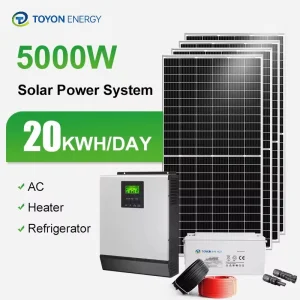
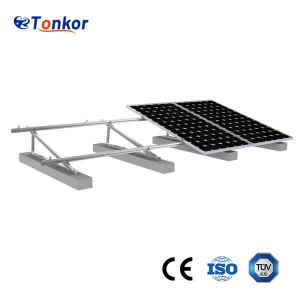
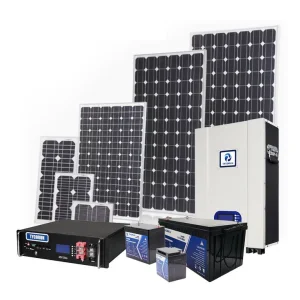
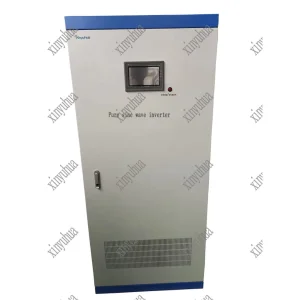
Why utility-scale energy projects are pivoting from lithium-ion to long-duration redox chemistries for multihour peak shifting and grid resiliency.
Unlike lithium-ion chemistries that face significant degradation under full depth-of-discharge (DoD) cycles, flow batteries exhibit virtually zero chemical degradation over 20,000+ continuous cycles. The long-term LCOS is up to 40% lower for long-duration configurations (8 to 24 hours), rendering them optimal for industrial scale integration.
By storing energy in external electrolyte tanks and generating power through cell stacks, flow batteries allow project developers to scale energy capacity (MWh) independently of power rating (MW). Expanding capacity simply requires larger tanks of active vanadium or zinc-iron chemical electrolyte, providing supreme operational flexibility.
Using aqueous, non-flammable liquid solutions eliminates the risk of thermal runaway, explosion, and toxic gas release. This native level of safety permits deployment in high-density urban areas, commercial basements, and sensitive environmental zones where lithium-ion containment systems are cost-prohibitive.
As wind and solar energy generation reach high levels of grid penetration, current 2-to-4-hour lithium-ion storage solutions become insufficient to handle multi-day wind droughts or prolonged cloud cover. The global energy market demands LDES (Long-Duration Energy Storage) infrastructures capable of sustaining discharge for 8, 12, or even 24 hours.
Vanadium Redox Flow Batteries (VRFBs) have emerged as the leading, commercialized chemical system to meet this requirement. The stable chemical structure of vanadium ions in liquid sulfuric acid solutions acts as a reliable energy reservoir, maintaining capacity even after decades of continuous operational standby.
We work in tandem with the world's leading engineering, procurement, and construction (EPC) firms to deliver raw stack assemblies, high-purity electrolytes, and turnkey containerized flow battery systems designed for the most demanding environmental climates.
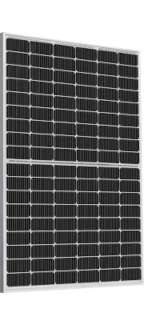
Leveraging nearly 20 years of solar sector history to establish next-generation Gigafactories for clean energy components.
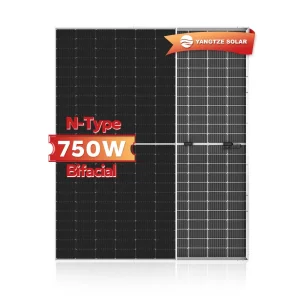
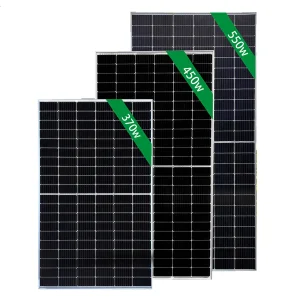
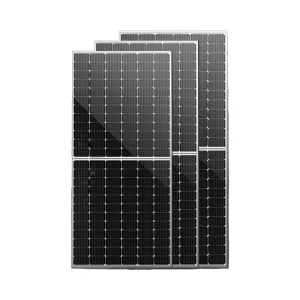
High-performance solar generation modules tailored to feed utility-scale flow battery storage systems with minimal conversion loss.
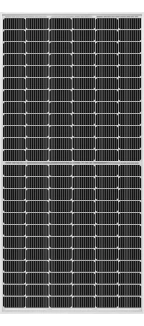
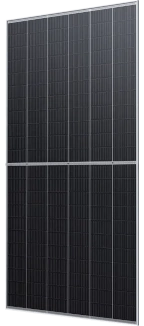
Understanding the raw material custody, manufacturing automation, and supply chain clusters that make China the epicentre of cost-effective energy storage.
China holds some of the world's largest deposits of vanadium ore. This domestic abundance minimizes raw materials import tariffs and secures a resilient pathway for processing high-purity vanadium pentoxide (V2O5) — the primary precursor for electrolyte fluids.
Furthermore, China boasts a highly concentrated collection of electrolyte chemical synthesis facilities, enabling the production of ready-to-use liquid solutions at a fraction of the transport and compounding costs observed in Europe and North America.
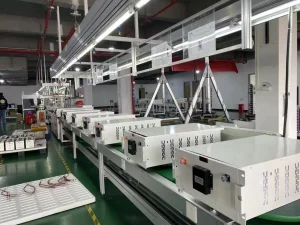
By leveraging established advanced manufacturing lines from the fuel cell and lithium industries, Chinese flow battery suppliers have automated stack assembly. Precise membrane placement, automated carbon paper layering, and ultrasonic welding reduce the margin of human error while dramatically scaling up annual output capacity.
From ore mining and refining to chemical formulation, membrane synthesis, stack sealing, and container packaging, Chinese ecosystems manage every link of the manufacturing chain locally.
Continuous investments in chemical R&D have yielded advanced hydrocarbon proton exchange membranes that compete directly with expensive perfluorosulfonic acid (PFSA) variants, slashing overall stack material expenses by nearly 35%.
By establishing manufacturing parks dedicated exclusively to long-duration batteries, manufacturers achieve economies of scale, producing multi-megawatt configurations with streamlined lead times.
From harsh desert microgrids to massive commercial office complexes, explore where flow technology creates real value.
Remote mining operations rely heavily on expensive, high-emission diesel generators. Combining high-efficiency solar arrays with a vanadium redox flow battery guarantees steady 24/7 power. The systems handle heavy motor startup currents and operate under ambient desert heat without air conditioning overhead.
Municipal energy operators utilize flow battery networks to absorb surplus power during periods of excessive solar generation and release it during peak demand hours. The absence of thermal runaway hazards simplifies environmental permitting for installation in proximity to residential centers.
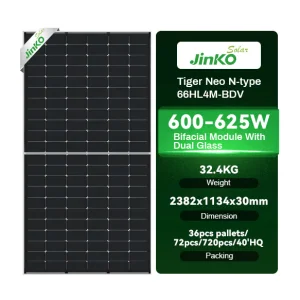
Manufacturing facilities with massive flat roofs pair high-efficiency, Topcon N-type double glass modules with containerized flow batteries to reduce carbon footprint penalties, avoid peak electricity tariffs, and guarantee clean fallback energy for critical production lines.
For procurement officers, EPC developers, and utility project directors, select flow battery suppliers must meet stringent metrics to assure bankability:
Get expert answers to the most common queries about vanadium redox chemistries, installation, warranties, and performance comparisons.
Vanadium Redox Flow Batteries (VRFBs) store energy in liquid tanks rather than inside the cell structure itself. This enables independent scaling of power (MW) and energy (MWh). While lithium-ion is compact and optimal for short-duration application (under 4 hours) and mobile electronics, VRFBs offer non-degrading chemistry lasting over 20 years, complete discharge without capacity loss, and present zero fire risks.
The structural life of the electrolyte liquid itself is essentially infinite; the vanadium ions can be recycled and reused indefinitely. The stack membranes and pump seals typically require servicing or replacement after 15 to 20 years. This brings the overall system operational life expectancy to 25 to 30 years, significantly longer than lithium-based options.
Yes. The vanadium electrolyte solution can be recovered, filtered, and reused in another battery system without chemical downgrade. Alternatively, the vanadium can be extracted for use in metallurgical alloy manufacturing, rendering it a highly sustainable energy storage technology with high end-of-life residual asset value.
Flow batteries operate optimally within a temperature range of 10°C to 40°C. In extreme environments, integrated thermal management systems (heat exchangers) maintain the electrolyte within this window. Unlike lithium-ion, cold temperatures do not cause permanent capacity loss, nor do high temperatures trigger fire concerns.
Key standards include UL 9540 (standard for energy storage systems and equipment), UL 1973 (batteries for use in stationary applications), and compliance with regional grid codes (e.g., IEEE 1547 for US grid interconnectivity, CE for European markets).
China controls the majority of global vanadium chemical processing and possesses integrated industrial supply chains. Local manufacturing benefits from low-cost precision stack component fabrication, automation of cell sealing, and domestic access to key raw materials. This enables Chinese manufacturers to provide systems at competitive price points.
The system-level Round-Trip Efficiency for vanadium redox flow batteries usually ranges between 65% and 75%. While slightly lower than lithium-ion (85%-90%), this is offset by the system's longevity, low maintenance overhead, and lack of degradation under high depth of discharge cycles.
Wing leverages nearly 20 years of solar module manufacturing to supply high-efficiency N-type monocrystalline and bifacial solar modules designed to interface directly with utility-scale flow battery DC buses, maximizing overall system performance and efficiency.
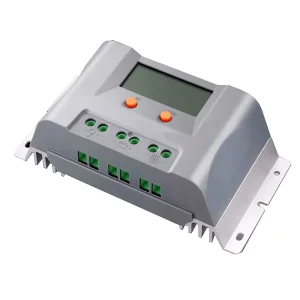
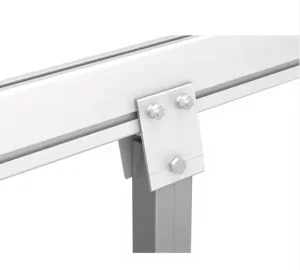
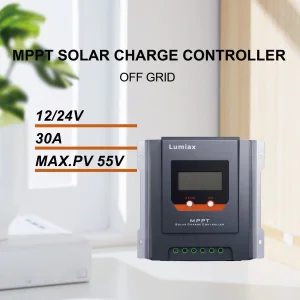
High-power bifacial solar modules, intelligent MPPT charge controllers, robust ground mounts, and heavy-duty battery enclosures to complete your energy project.