Wing Solar
Wing Solar
Wing Solar
In the rapidly evolving landscape of renewable energy, the "safety-first" principle has transitioned from a recommendation to a mandatory global standard. Fireproof solar panels, specifically those meeting Fire Class A ratings, are no longer a niche product but a cornerstone of sustainable infrastructure for Commercial, Industrial (C&I), and Utility-scale projects.
Global insurers are increasingly requiring Class A fire-rated modules for rooftop installations on high-value assets like data centers, chemical plants, and logistics hubs to reduce premium costs and liability.
Building Integrated Photovoltaics (BIPV) demand fireproof transparency. Our double-glass N-Type modules provide the structural integrity and flame resistance required by modern building codes (UL 790 / IEC 61730).
Beyond fire resistance, these panels are designed to withstand extreme thermal fluctuations, high wind loads, and corrosive environments, ensuring a 30-year lifecycle in harsh industrial zones.
As a leading Chinese manufacturer, Wing Solar combines 20 years of technical heritage with Industry 4.0 manufacturing processes.
Our manufacturing facility in China utilizes fully automated AI-driven quality inspection, ensuring zero-defect cell stringing and lamination, which is critical for preventing thermal runaway and electrical fires.
To serve the European market with precision, our Vienna headquarters ensures localized technical support, compliance with EU fire safety directives, and efficient supply chain management.
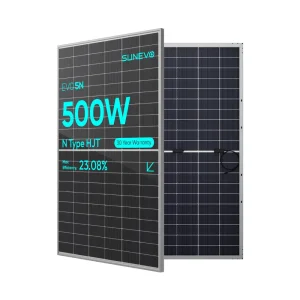
Engineered for maximum yield and unparalleled safety. Our N-Type bifacial technology provides up to 30% additional energy gain from the rear side.
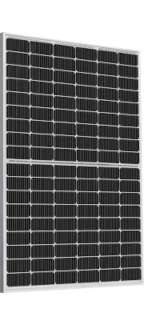
Efficiency: 22.77%
Warranty: 30 years
Fire Class: A (Double Glass)
Pmax: -0.29%°C
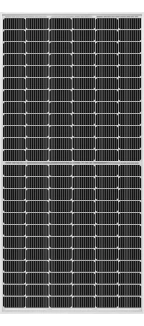
Efficiency: 22.84%
Warranty: 30 years
Dimensions: 2279 x 1134 x 35mm
Impact: High fire resilience
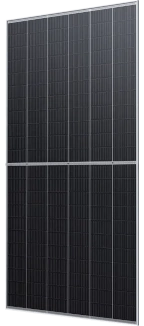
Efficiency: 22.70%
Bifaciality: Up to 85%
Structure: Ultra-strong frame
Standard: TUV/UL Certified
The China advantage extends beyond labor costs. It is about Information Gain through vertical integration and massive R&D in materials science.
Traditional EVA film becomes acidic over time. Chinese innovators like Wing have shifted to POE (Polyolefin Elastomer) encapsulation, which has superior water resistance and much higher decomposition temperatures, significantly reducing fire risk during electrical faults.
By replacing the flammable plastic backsheet with 2.0mm heat-strengthened glass, we create a non-combustible "sandwich." This structure is the gold standard for fireproof solar panels, achieving the highest possible safety ratings worldwide.
Micro-cracks are the primary cause of "hot spots" that lead to fires. Our factory uses triple-stage AI EL testing to detect invisible cracks before the panels ever leave the facility.
Authoritative answers for EPC contractors and industrial developers.
A: These ratings, defined by UL 790, measure the resistance of the PV module to external fire. Class A is the highest rating, indicating the module can withstand severe fire exposure. Most standard backsheet panels are Class C. Our double-glass modules achieve Class A, making them suitable for hazardous industrial environments.
A: On the contrary, the materials used for fireproofing, such as double glass and POE, actually enhance efficiency by reducing degradation and improving thermal dissipation. Our N-Type TopCon cells maintain a lower operating temperature, which boosts real-world energy harvest.
A: Many insurance companies offer lower premiums or "preferred risk" status to buildings equipped with Class A fire-rated solar systems. This significantly improves the project's Internal Rate of Return (IRR) over its 30-year life.
A: China currently hosts the world's most advanced PV supply chain. Manufacturers like Wing have the scale to implement 100% automated inspection and high-cost fire-resistant materials while maintaining competitive pricing through economies of scale that localized manufacturers cannot match.