Wing Solar
Wing Solar
Wing Solar
Explore our foundational array of highly adapted system balancing technologies, engineered to maximize energy conversion and withstand severe application environments.
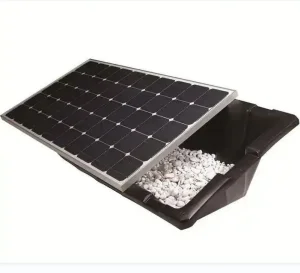
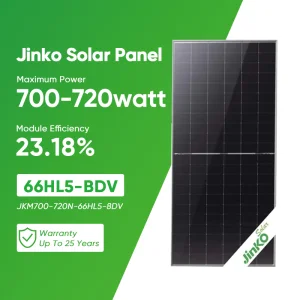
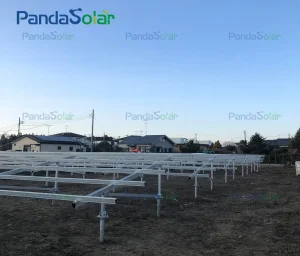
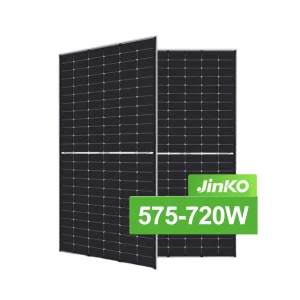
Analysing macroeconomic shifts toward distributed solar networks, deep carbon mitigation strategies, and custom-tailored industrial power solutions.
Modern enterprise energy strategies require a transition away from rigid centralized power generation architectures toward dynamic, localized generation networks. Driven by ambitious Scope 1, 2, and 3 global decarbonization requirements, multinational corporations are shifting from basic commoditized grid configurations to deeply customized solar generation arrays. This adaptation allows heavy industrial structures, localized distribution hubs, and agricultural projects to overcome the historical limitations of regional grids.
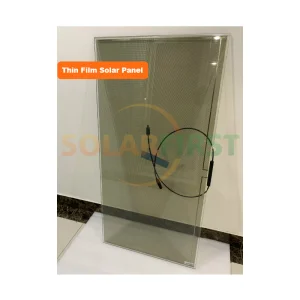
By leveraging advanced custom photovoltaic profiles—ranging from transparent Cadmium Telluride (CdTe) thin-film BIPV integration to extreme-density monocrystalline arrays—enterprises are transforming structural facades into functional generation units. Custom architectural engineering ensures that varying roof geometry, systemic weight limits, and specific regional climatic hazards are managed safely, preserving structural integrity while maximizing raw land or facility surface utility.
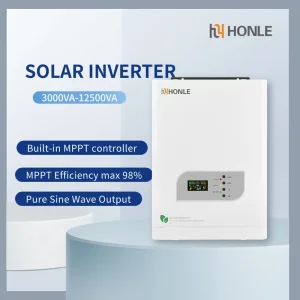
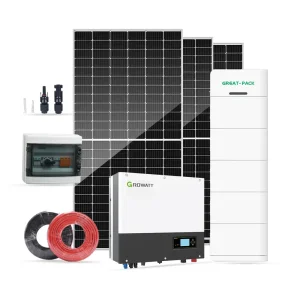
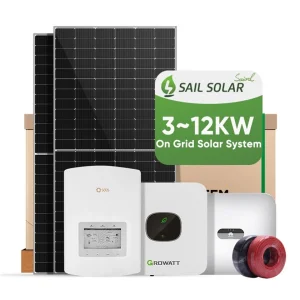
Seamlessly integrating custom solar modules with utility-scale BESS and smart hybrid inverters to bypass local grid capacity limits.
Tailored dimensioning, framing tolerances, and electrical topologies that fit specific regional site variables and physical constraints.
Enhanced engineering to withstand severe environments, certified for extreme mechanical loads, marine salt mist, and high ambient temperatures.
Proactive compliance design supporting regional grid-tie standards, anti-islanding mandates, and building-integrated fire safety regulations.
We offer a wide range of products for residential, commercial and industrial applications, and utility-scale. We are committed to utilizing the most advanced technologies and maintaining the highest quality standards in the design, manufacturing, and delivery of our solar panels.
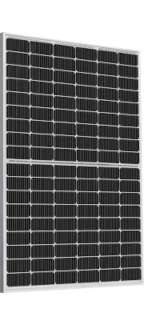
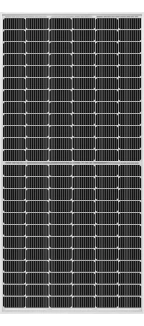
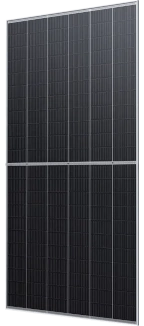
Exploring the core manufacturing processes, vertical integration models, and automated technological frameworks that drive China's leading role in modern global photovoltaic supply chains.
Our manufacturing centers employ highly automated processing equipment, real-time laser sorting, and inline EL imaging detection to eliminate internal cell microfiber anomalies before final module encapsulation.
By establishing manufacturing hubs near major raw silicon suppliers, ingot-pulling plants, and glass-tempering providers, our operations mitigate raw material cost fluctuations and stabilize production lead times.
Dedicated assembly lines allow for rapid reconfiguration of module sizing, custom backsheet configurations, and tailored junction box configurations, cutting OEM prototype cycles from months down to a few days.
The manufacturing efficiency of Chinese photovoltaic plants goes beyond simple manual labor scalability. It is built on complete vertical integration across the entire solar manufacturing ecosystem. From the synthesis of high-purity polysilicon to advanced wafer ingot pulling, and down to Topcon or Heterojunction (HJT) cell matrix placement, every stage is located within close industrial proximity. This geographic clustering significantly reduces inter-operational transport damage, cuts regional carbon footprints during manufacturing, and secures reliable component tracking across all production batches.
Furthermore, the transition to automated Industry 4.0 processing models guarantees that custom module orders—regardless of specific dimensional adjustments, custom framing, or unique junction box configurations—maintain precise spatial tolerances of less than 0.1mm. High-accuracy automated optical sorting engines examine cell structures under specialized multi-spectrum light, identifying and removing sub-surface micro-cracks or ribbon positioning errors that could lead to hot-spot degradation over multi-decade deployments. This industrial scale ensures consistent compliance with international performance and reliability standards.
Examining customized engineering applications across diverse operational settings—from building-integrated environments to rugged marine deployment zones.
Urban micro-generation requires specialized aesthetic and structural designs that traditional glass modules cannot accommodate. Building Integrated Photovoltaics (BIPV) blend solar power generation directly into architectural facades, overhead clear canopies, and industrial curtain wall systems. By utilizing advanced Cadmium Telluride (CdTe) thin-film tech with variable transparency parameters (30%, 40%, 50%), modern architectures maintain natural interior illumination profiles while harvesting solar energy across high-exposure vertical surfaces.
These customized setups protect underlying insulation, provide reliable thermal screening barriers, and reduce HVAC loads for multi-story buildings. For open parking configurations, specialized double-glass bifacial architectural coverings turn clear shade carports into clean power generation sources. These systems integrate directly with local energy storage systems (BESS) to charge electric fleets without drawing power from regional grids.
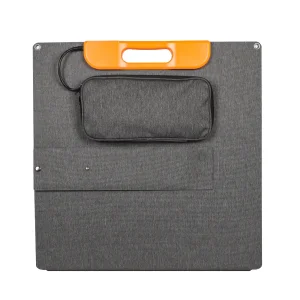
Off-grid operations in marine and mobile settings face challenging environmental conditions, including salt-mist corrosion, variable wind loads, and restricted surface footprints. Standard aluminum-framed solar panels often experience rapid structural degradation under prolonged exposure to saltwater environments and high humidity. Custom lightweight, flexible monocrystalline options resolve these issues by using specialized ETFE fluoropolymer surface layers instead of heavy glass faces.
These flexible solar layers bend up to 30 degrees to match the curved hulls of maritime transport ships, scientific research buoys, and emergency support vehicles. Rated with robust IP68 ingress protection, these modules feature hermetically-sealed junction boxes and specialized anti-corrosion cabling. They provide consistent performance under severe wave impacts and extreme temperature swings, delivering reliable power to critical onboard communication, navigation, and telemetry systems.
An overview of our global operational footprint, long-term technological development, and manufacturing capacity growth trajectory.
Deeply rooted in solar innovation, cultivating extensive expertise in high-efficiency N-Type TOPCon cell matrix architectures since 2005.
Expanding our current 3GW operational capacity to a 10GW footprint via highly automated Industry 4.0 manufacturing centers.
Actively serving critical power infrastructures, municipal grids, and corporate portfolios in more than 90 international regions.
Recognized as a reliable Tier 1 manufacturer by BloombergNEF, confirming financial transparency and bankability for global enterprise financing.
Since its founding in 2005, Wing Solar has maintained strong growth, developing into an integrated international energy provider. Operating as a publicly traded company since 2023, Wing supports a workforce of more than 500 specialized solar professionals across its manufacturing sites in China and its operational headquarters in Vienna, Austria. This dual presence balances efficient manufacturing capabilities with localized engineering support, prompt logistics management, and clear compliance processing across European and western markets.
Our business focus centers on technological innovation, customer satisfaction, and long-term environmental sustainability. Backed by over 15 industry awards, Wing Solar provides comprehensive product warranties of up to 20 years on parts and 30 years on linear power performance. By expanding our production capacity toward 10GW by 2026, we continue to improve accessibility to clean energy resources, helping global enterprises future-proof their operations against shifting energy markets.
Analyzing key supply chain considerations, risk mitigation strategies, and technology selection criteria for institutional solar procurement teams.
Large-scale solar projects require careful management of international supply chains. Enterprise buyers must look beyond initial per-watt module costs and evaluate the long-term reliability of the manufacturer's operational ecosystem. Important factors include verifying clear traceability of raw polysilicon materials, ensuring compliance with evolving import regulations, and evaluating factory financial stability to back multi-decade performance guarantees.
Sourcing from verified BloombergNEF Tier 1 manufacturers ensures that projects remain highly bankable for international lending institutions and equity investors. Additionally, choosing manufacturers with regional offices—such as Wing's operational headquarters in Vienna—helps mitigate cross-border supply chain risks. This structure simplifies customs management, provides local recourse for warranty processing, and ensures access to responsive on-site technical support during critical construction phases.
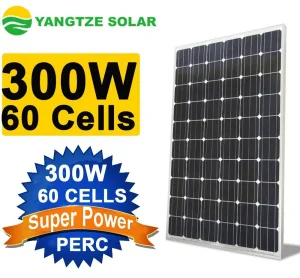
The global solar market is rapidly transitioning away from traditional P-type PERC cell technologies due to their physical efficiency limitations. High-efficiency N-type configurations (such as TOPCon and HJT) have become the industry standard for commercial and utility installations. N-type modules provide distinct performance advantages, including lower initial Light-Induced Degradation (LID) and improved performance under high temperature conditions.
These features deliver higher energy yields per square meter over the life of the installation, improving project internal rates of return (IRR). Furthermore, N-type architectures offer higher bifaciality factors, enabling bifacial modules to capture significantly more energy from ground-reflected light (albedo). This makes them highly effective for utility-scale installations, floating solar arrays, and complex commercial rooftop configurations.
Expert clarifications regarding cell architectures, customization capabilities, logistics handling, and multi-decade structural compliance frameworks.
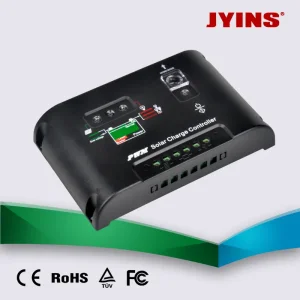
Review our extended selection of matching components, balance-of-system hardware, and high-capacity modules designed for complete plant connectivity.