Wing Solar
Wing Solar
Wing Solar
Explore our high-performance components optimized for grid stability, micro-inversion reliability, and maximum levelized cost of energy (LCOE) reduction.
The global transition toward decentralized power generation has positioned Commercial and Industrial (C&I) Photovoltaic (PV) systems as the primary engine for corporate decarbonization. Faced with escalating grid tariffs, stringent ESG (Environmental, Social, and Governance) disclosure mandates, and corporate net-zero pledges (such as RE100), global enterprises are shifting from passive energy consumers to active "prosumers."
Today, C&I solar applications are no longer just simple rooftop installations. They have evolved into highly complex energy ecosystems comprising bifacial high-power modules, dynamic tracking structures, smart battery energy storage systems (BESS), and intelligent energy management software. Driven by substantial levelized cost of electricity (LCOE) reductions, regions like Europe, North America, and the Asia-Pacific are witnessing massive capital inflow into commercial solar investments. This market shift demands top-tier reliability, long-term degradation resistance, and seamless supply-chain delivery systems capable of sustaining 25 to 30 years of continuous power output.
"According to recent BloombergNEF analyses, global C&I PV installations are projected to maintain double-digit compound annual growth rates, fueled by grid parity and the integration of smart battery systems that mitigate demand charge spikes."
Historically, P-type PERC cells dominated the solar utility and commercial landscape. However, the solar industry has reached the practical efficiency limits of PERC technology. Enter N-type silicon technology, primarily utilizing Tunnel Oxide Passivated Contact (TOPCon) and Heterojunction (HJT) cell architectures. N-type modules possess inherent physics advantages: near-zero Light Induced Degradation (LID), a lower temperature coefficient, and a significantly higher bifaciality factor.
We offer a wide range of products for residential, commercial and industrial applications, and utility-scale. We are committed to utilizing the most advanced technologies and maintaining the highest quality standards in the design, manufacturing, and delivery of our solar panels.
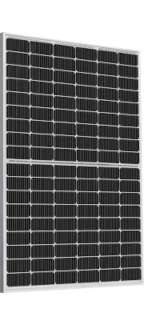
Design: Standard
Dimensions: 1762 x 1134 x 30 mm
Efficiency: 22.77%
Pmax Coeff.: -0.29%/°C
Warranty: 30 Years Expected Life
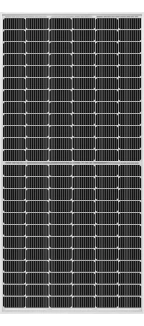
Design: Standard
Dimensions: 2279 x 1134 x 35 mm
Efficiency: 22.84%
Pmax Coeff.: -0.29%/°C
Warranty: 30 Years Expected Life
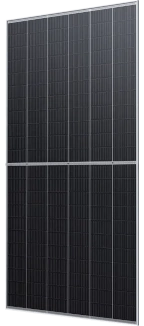
Design: Bifacial
Dimensions: 2384 x 1303 x 35 mm
Efficiency: 22.70%
Pmax Coeff.: -0.30%/°C
Warranty: 30 Years Expected Life
China's undisputed leadership in the photovoltaic industry rests on an unparalleled vertical integration strategy, cutting-edge automation, and massive industrial clustering. From silicon wafer growing to solar cell printing and final module assembly, Chinese manufacturing hubs utilize advanced Industry 4.0 automation. This level of vertical coordination allows exporters to optimize panel structural integrity, control raw material degradation rates, and drastically reduce delivery times.
Furthermore, local supply chain clusters mean key components like ultra-clear tempered glass, tinned copper PV cables, intelligent charge controllers, and customized structural mounts are manufactured in close geographic proximity. This reduces localized logistics bottlenecks and ensures that comprehensive system packages, including modular grid-tied or off-grid set-ups, can be custom-engineered and loaded directly into international shipping containers at highly competitive costs.
Every exported shipment undergoes dual EL (Electroluminescence) testing to spot microscopic cell cracks, along with flash tests verifying nominal power values before global custom clearance.
Fully compliant with TUV Rheinland, CE, UL, and MCS standards, ensuring frictionless regulatory permitting and local utility grid-connection compliance across global regions.
Our business focus revolves around innovation, customer satisfaction, and environmental sustainability.
In nearly two decades, we’ve cultivated a deep understanding of solar technologies, trends, and advancements, embodied in our latest N-Type technology series. Since its establishment in 2005, Wing has maintained a steady growth trajectory, today employing more than 500 people in China and Europe. In 2023, Wing solidified its global presence by establishing operational headquarters in Vienna, Austria, and became a publicly listed company.
Wing stands as a well-established Tier 1 manufacturer recognized by BloombergNEF. We are a stable partner producing high-quality solar panels in large volumes, supported by up to 20 years of solid product warranty. With over 6GW deliveries spanning 90+ regions worldwide, we proudly showcase our commitment to renewable energy and preserving the global environment, striving to make clean energy accessible to all people.
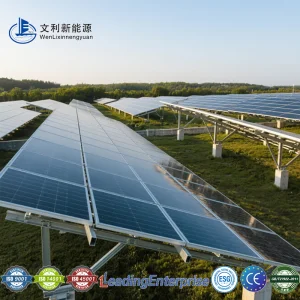
No two commercial facilities are identical, meaning application scenarios vary widely based on available surface area, wind load zones, and local grid policies:
For procurement officers, sourcing commercial solar components involves long-term risk assessment. Key factors to evaluate include warranty compliance (insist on linear performance warranties backed by third-party reinsurance), degradation curves (N-type systems should guarantee less than 0.4% annual power loss after year one), and structural load ratings (tracker brackets must handle wind speeds up to 60 m/s with automatic stow algorithms).
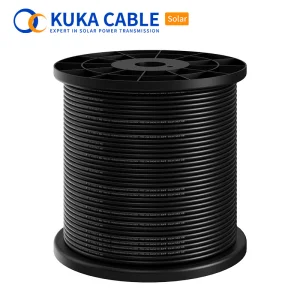
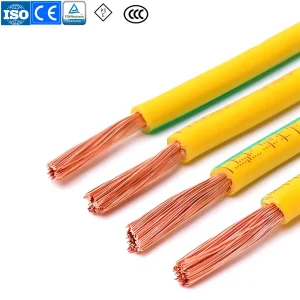
Additionally, selecting the correct balance of system (BOS) components—such as certified TUV-rated 6mm tinned copper solar cables—minimizes voltage drop across long DC runs, preventing thermal runaway and maximizing energy yields over three decades of operation.
Direct technical feedback from our engineering experts regarding system setups, warranties, and deployment.
N-type TOPCon modules offer a higher theoretical and mass-production efficiency limit, a lower power temperature coefficient (-0.29%/°C compared to -0.35%/°C of PERC), and near-zero initial Light-Induced Degradation (LID). This ensures higher energy generation under hot climates and better yields in low-light environments, leading to a faster return on investment (ROI) for commercial enterprises.
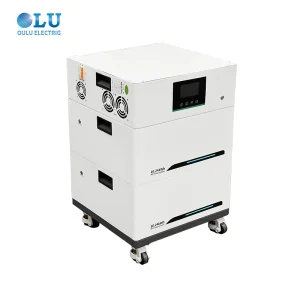
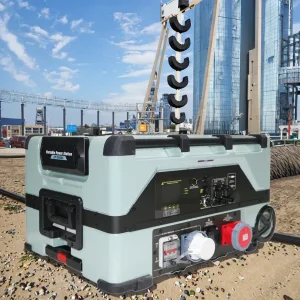
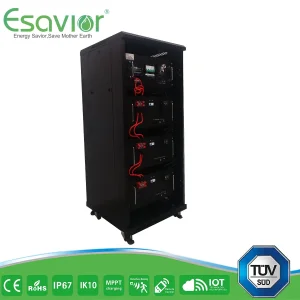
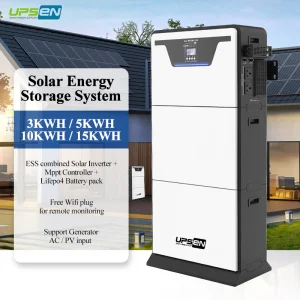
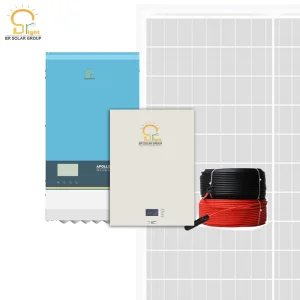
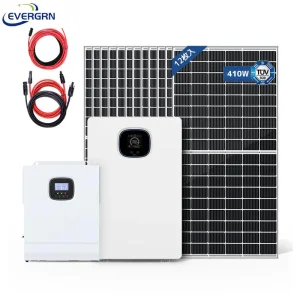
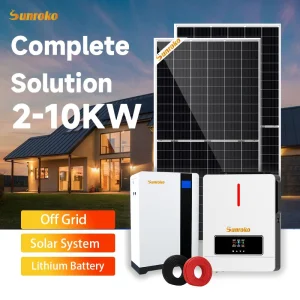
Our customized off-grid solar energy setups use high-safety Lithium Iron Phosphate (LiFePO4) chemistries paired with advanced Battery Management Systems (BMS). The BMS actively monitors temperature variations, state of charge (SoC), and over-current protection. Coupled with hybrid MPPT inverters, the system isolates faulty modules dynamically to maintain uptime without risk to local operational personnel.
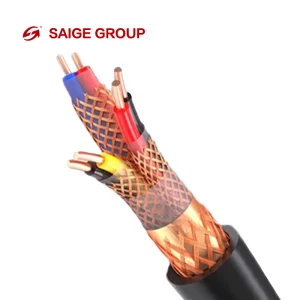
TUV certification ensures that products like our 6mm Solar Cables can withstand harsh environmental conditions, UV exposure, and wide temperature variations (-40°C to +90°C) for an expected lifetime of 30 years. Using non-certified PV cables often leads to insulating jacket cracking, ground faults, and potentially catastrophic fire risks at the installation site.
By shifting panels to follow the sun’s trajectory throughout the day, tracker brackets ensure solar rays hit the glass at perpendicular angles. This boosts generation efficiency by 15% to 25% compared to fixed-angle ground mounts, significantly reducing the Levelized Cost of Energy (LCOE) and decreasing payback periods for commercial investments.
Complete your renewable infrastructure with our highly durable solar setups, certified cabling, and high-conversion storage solutions.