Wing Solar
Wing Solar
Wing Solar
Despite the rapid rise of N-type TOPCon and HJT technologies, P-type monocrystalline PERC (Passivated Emitter and Rear Cell) modules remain the bedrock of the global solar industry. As a leading China OEM P-type solar panel manufacturer, we recognize that the maturity of this technology provides an unparalleled balance between efficiency and affordability.
In 2024, the global commercial and industrial (C&I) sectors continue to favor P-type panels for their proven reliability and predictable long-term performance. In markets across Southeast Asia, Africa, and Latin America, P-type modules are the go-to solution for utility-scale projects where the Levelized Cost of Energy (LCOE) is the primary driver of investment decisions.
Transitioning from M6 to M10 (182mm) and G12 (210mm) wafers has allowed us to increase module power output beyond 600W+, significantly reducing BOS costs for installers.
Our P-type bifacial modules capture light from both sides, increasing energy yield by up to 25% in high-albedo environments like desert sands or white rooftops.
Advancements in POE encapsulation and dual-glass structures have mitigated PID (Potential Induced Degradation) issues, extending the lifespan of P-type panels.
As a Tier 1 equivalent manufacturing facility in China, we offer global partners a competitive edge through our vertically integrated supply chain. Our OEM services are designed for brands looking to scale without the overhead of their own manufacturing plants.
Cost Efficiency: By sourcing raw silicon and managing wafer production in-house, we provide the most competitive pricing in the market.
Customization: From custom dimensions and backsheet colors to specialized junction boxes and connector types, we adapt to your local market requirements.
Strict Quality Control: Our facility utilizes AI-driven EL (Electroluminescence) testing and automated IV curve sorting to ensure 100% defect-free delivery.
Procuring solar panels at scale requires a deep understanding of logistics, import regulations, and local climate adaptation. Our P-type panels are engineered for diverse environments:
International buyers benefit from our established logistics network, ensuring safe sea freight and compliance with certificates like CE, TUV, UL, and MCS.
We offer a wide range of products for residential, commercial and industrial applications, and utility-scale. We are committed to utilizing the most advanced technologies and maintaining the highest quality standards in the design, manufacturing, and delivery of our solar panels.
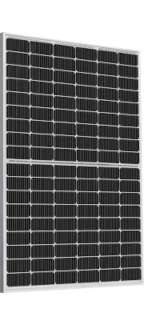
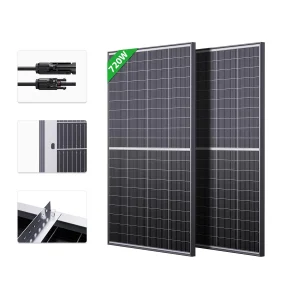
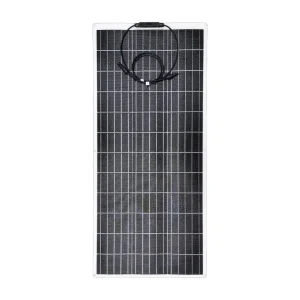
Design: standard
Dimensions: 1762 x 1134 x 30mm
Efficiency: 22.77%
Warranty: 30 years
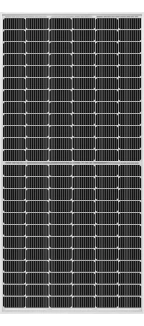
Design: standard
Dimensions: 2279 x 1134 x 35mm
Efficiency: 22.84%
Warranty: 30 years
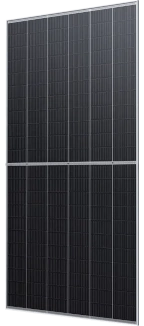
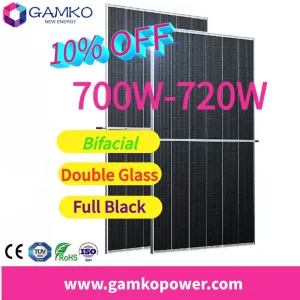
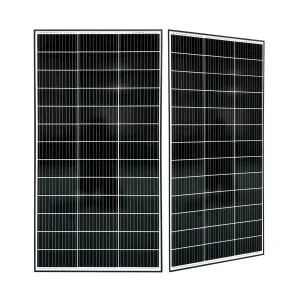
Design: bifacial
Dimensions: 2384 x 1303 x 35mm
Efficiency: 22.70%
Warranty: 30 years
Our extensive expertise in solar technologies is reflected in our latest high-performance products.
Production capacity is currently 3GW, projected to reach 10GW by 2026 to meet rising global demand.
Over 6GW delivered worldwide across 90+ regions, ensuring clean energy accessibility for everyone.
Since its establishment in 2005, Wing has maintained a steady growth trajectory, today employing more than 500 people in China and Europe. Wing stands for a well-established Tier 1 manufacturer by BloombergNEF. We are a stable company producing high-quality solar panels in large volumes and with strong warranties.
To understand why P-type panels are the industry's workhorse, one must look at the PERC (Passivated Emitter and Rear Cell) architecture. By adding a passivation layer to the rear of the solar cell, we enable the cell to capture more sunlight. This layer reflects light that passes through the cell back into the silicon, giving it a second chance to generate electrons. Furthermore, it reduces "electron recombination," which prevents the loss of energy within the cell.
Our factory utilizes Industry 4.0 standards. Automation is key to maintaining the tight tolerances required for modern P-type modules. Our production line includes:
While the industry discusses the "N-type takeover," P-type remains indispensable for the next decade. The manufacturing infrastructure for P-type is vast and optimized. For many developers, the slightly lower efficiency of P-type compared to N-type is offset by its lower purchase price and shorter payback period. As a manufacturer, we continue to push the boundaries of P-type by incorporating half-cut cell designs and shingled cell technology, which further boost performance in shaded conditions.