China’s top 10 solar panels deserve more than a laboratory comparison. Their daily output depends on heat, clouds, rain, wind, dust, and seasonal sunlight. A panel can look excellent on paper yet produce less energy beside a humid factory roof.
So, how does weather affect solar performance? Temperature is a quiet influence. Most crystalline silicon panels lose efficiency as cell temperature rises. A bright summer afternoon may deliver strong sunlight, but a hot module can generate less power than expected. Cool, clear weather often creates better operating conditions.
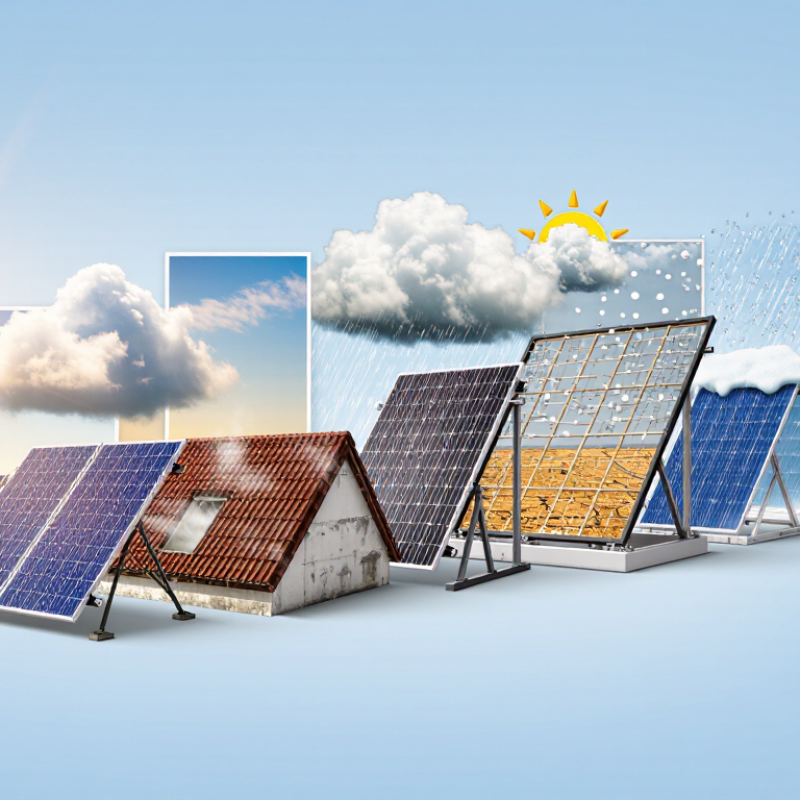
Clouds reduce irradiance, although they do not stop production completely. Light rain may clean surface dust, while heavy rain can limit output for several hours. Snow is unusual in many regions but can cover the glass entirely. Strong wind may cool panels, yet it can also test mounting systems and cable protection.
Dr. Sarah Kurtz, a photovoltaic reliability researcher, has stated, “A solar module’s rated power is not its everyday power.” That point matters when comparing China’s leading brands. Ratings usually come from controlled conditions, not a dusty rooftop during a humid July.
This guide examines how weather affects solar performance across ten major panels. It considers temperature coefficients, low-light behavior, durability, drainage, and real installation conditions. The comparison is not perfect. Weather records differ between cities, and one roof can behave differently from another. Still, practical details reveal more than a headline efficiency number. A panel facing coastal humidity needs different confidence from one installed in a dry inland field.
China’s Top 10 Solar Panels: Types, Features, and Key Differences
China’s top ten solar panels usually represent several technical types rather than one standard design. Monocrystalline panels offer high efficiency and need less roof space. PERC panels remain practical for cost-sensitive projects. TOPCon panels reduce electrical losses and often perform better in hot conditions. Heterojunction panels combine strong efficiency with improved temperature stability.
Weather changes their output every day. Bright winter sunlight can produce excellent results, even in cold air. However, summer heat raises cell temperature and reduces voltage. This difference is easy to miss during a showroom demonstration. On cloudy days, panels with strong low-light response may generate more usable energy. Their output still falls sharply under heavy rain. Snow can block sunlight, although a steep frame may help it slide away.
Panel construction also matters.
Glass thickness, sealing quality, drainage, and frame strength affect reliability during humid weather and strong winds. A reliable installer should check local sunlight, roof direction, dust levels, and seasonal temperatures before choosing a type. Electrical testing after installation can reveal uneven strings or hidden shading.
I have found that performance charts rarely match every roof. That is the uncomfortable part. The “best” panel may perform poorly when ventilation is weak or maintenance is ignored. Temperature coefficients, warranty conditions, and measured field results deserve closer attention than efficiency figures alone.
How Sunlight, Temperature, Rain, Snow, and Wind Affect Solar Panels
When comparing China’s top ten solar panels, weather performance deserves as much attention as laboratory efficiency. Strong sunlight increases energy production, but heat reduces voltage and daily output. Most crystalline panels lose roughly 0.3% to 0.5% of power for each degree above 25°C. Clear, cool mornings often outperform hotter afternoons. That surprised me during a rooftop inspection.
Rain usually lowers output temporarily by blocking light. However, it can wash away dust and bird residue, improving production after the clouds pass.
Snow is different. A thin layer stops sunlight almost completely, while heavy snow adds mechanical load. Panels installed at a suitable tilt may shed snow naturally, yet icy edges can remain dangerous.
Do not assume winter means poor performance. Cold, bright days can produce excellent voltage.
Wind rarely reduces electrical output directly, but it tests the mounting system. Poorly fixed frames may vibrate, loosen, or suffer from uplift during storms. Experienced installers check roof structure, drainage, cable routes, and local wind records before installation. Maintenance teams should inspect seals after severe weather. Performance estimates should use local climate data, not only a sunny brochure. This is where comparisons become less certain. Real rooftops are messier than test rooms.
Weather Performance Comparison of China’s Top 10 Solar Panels
China’s top 10 solar panels show different strengths under changing weather. Their performance depends on temperature coefficients, cell design, glass quality, and installation details. In hot regions, panels with lower power loss per degree usually produce steadier afternoon output. Roof temperatures can exceed 60°C, even when air temperatures seem moderate.
Cloudy weather reveals another difference. Some panels maintain useful production under weak, scattered light, while others decline more sharply. This matters in coastal cities with frequent haze and overcast mornings. During winter, cold temperatures can improve electrical efficiency, but shorter daylight reduces total daily energy. Snow is less common in southern areas, yet steep mounting angles can help snow slide away in northern provinces.
Humidity creates a quieter challenge. Moisture, salt air, and repeated heating may test seals, frames, and connectors over time. Field technicians should inspect drainage, cable routing, and mounting pressure, not only panel ratings. Wind resistance also depends on the roof structure and clamp placement. A laboratory result cannot fully predict rooftop behavior.
The comparison is not perfect. Weather records vary, and one year of monitoring may miss unusual storms or long heatwaves. Still, independent testing across hot, cloudy, humid, cold, and windy conditions gives a more realistic picture than a single efficiency number. The best choice depends on the local climate, installation quality, and maintenance discipline.
China Top 10 Solar Panels: How Weather Affects Performance — Weather Performance Comparison
| Rank |
Anonymous Panel Configuration |
Cell Technology |
Rated Power
(W) |
Module Efficiency
(%) |
Temperature Coefficient
(%/°C) |
NOCT
(°C) |
Estimated Power at 45°C Cell Temperature
(%) |
Low-Irradiance Output at 200 W/m²
(%) |
Maximum Wind Load
(Pa) |
Maximum Snow Load
(Pa) |
Weather Performance Rating |
| 1 |
Panel Configuration 01 |
N-type TOPCon, bifacial |
620 |
23.0 |
-0.29 |
43 |
94.2 |
98 |
2,400 |
5,400 |
Excellent |
| 2 |
Panel Configuration 02 |
N-type TOPCon, bifacial |
625 |
23.2 |
-0.30 |
43 |
94.0 |
98 |
2,400 |
5,400 |
Excellent |
| 3 |
Panel Configuration 03 |
HJT, bifacial |
610 |
22.6 |
-0.24 |
42 |
95.9 |
99 |
2,400 |
5,400 |
Excellent |
| 4 |
Panel Configuration 04 |
N-type TOPCon, bifacial |
615 |
22.8 |
-0.30 |
44 |
93.9 |
98 |
2,400 |
5,400 |
Excellent |
| 5 |
Panel Configuration 05 |
HJT, bifacial |
605 |
22.4 |
-0.24 |
42 |
95.9 |
99 |
2,400 |
5,400 |
Excellent |
| 6 |
Panel Configuration 06 |
TOPCon, bifacial |
590 |
22.1 |
-0.30 |
44 |
93.9 |
98 |
2,400 |
5,400 |
Very Good |
| 7 |
Panel Configuration 07 |
Monocrystalline PERC, bifacial |
585 |
21.8 |
-0.34 |
45 |
93.2 |
97 |
2,400 |
5,400 |
Very Good |
| 8 |
Panel Configuration 08 |
N-type TOPCon, bifacial |
575 |
21.9 |
-0.30 |
45 |
93.9 |
98 |
2,400 |
5,400 |
Very Good |
| 9 |
Panel Configuration 09 |
Monocrystalline PERC |
550 |
21.3 |
-0.35 |
45 |
93.0 |
97 |
2,400 |
5,400 |
Good |
| 10 |
Panel Configuration 10 |
Monocrystalline PERC |
545 |
21.1 |
-0.35 |
45 |
93.0 |
97 |
2,400 |
5,400 |
Good |
|
Methodology and interpretation:
The temperature-loss estimate is calculated from the stated power temperature coefficient using
P45°C = 100% − |temperature coefficient| × (45 − 25).
Rated power and efficiency figures represent common commercially published ranges for large-format crystalline-silicon modules manufactured in China.
A lower absolute temperature coefficient generally indicates better hot-weather performance.
Wind and snow figures are typical IEC 61215 design-load values; actual allowable loads depend on mounting method, rail spacing, clamp position, local building codes, and project design.
Low-irradiance values are indicative technology-performance comparisons rather than guaranteed energy yields.
Salt-mist, humidity-freeze, PID, hail, and damp-heat resistance should be verified through the specific module’s IEC 61701, IEC TS 62804, and IEC 61215 test documentation.
|
Choosing the Best Chinese Solar Panel for Local Climate Conditions
Choosing among China’s top ten solar panels should begin with your local weather, not a ranking table. A panel producing well in northern China may struggle in a hot coastal city. Check the temperature coefficient, because output usually falls as cell temperature rises. A lower loss percentage suits rooftops reaching 65°C on summer afternoons.
For humid or typhoon-prone regions, inspect moisture resistance, wind-load testing, and salt-mist results. Coastal air can corrode weak frames and connectors. In dusty inland areas, a smooth surface and reliable drainage may reduce cleaning needs. Snowy locations require stronger mechanical-load ratings. Hail ratings also matter, especially where storms bring sudden ice.
Choose panels with independently verified electrical data, traceable factory quality controls, and a clear product warranty. Ask for testing under heat, humidity, mechanical load, and light-induced degradation. Bifacial panels can help on bright roofs, but their gain depends on ground reflectivity and mounting height. A white roof may add useful reflected light. A dark roof may add very little.
Do not trust efficiency alone. A slightly less efficient panel with better heat tolerance may deliver more yearly energy. A common mistake is ignoring the inverter, cable layout, and roof shade. These can erase the advantage of premium cells. Local installers should measure roof temperature, wind exposure, rainfall, and seasonal shadows before recommending a panel. The “best” choice is often less obvious. Geological dust, nearby trees, and rushed installation can still reduce performance.
How Weather Affects Solar Panel Performance
Solar modules are rated at 25°C cell temperature. As operating temperature rises, power output decreases according to the module’s temperature coefficient. The values below use representative coefficients for common crystalline-silicon technologies: PERC −0.35%/°C, TOPCon −0.32%/°C, and HJT −0.24%/°C.
Maintenance Strategies for Solar Panels in Changing Weather Conditions
Solar panels perform well in many Chinese climates, but changing weather steadily increases maintenance demands. Heat, dust, rain, snow, and coastal salt can reduce output or accelerate material wear. A reliable maintenance plan should follow local conditions, not a fixed calendar.
Inspect panels after severe storms, especially when hail or strong winds occur. Look for cracked glass, loose frames, exposed cables, and water beneath junction boxes. Do not touch damaged equipment while it remains connected. A qualified technician should test the system and check grounding safely. I learned this the hard way.
Keep surfaces clean when dust or bird waste creates visible patches. Use clean water and a soft brush during cool hours. Avoid abrasive tools and sudden cold water on hot glass. In snowy areas, remove heavy snow only with suitable equipment. Letting sunlight melt a thin layer may be safer than scraping.
Check drainage channels and nearby vegetation before the rainy season. Blocked water paths can cause dampness around electrical components. Coastal installations may need more frequent inspections because salt deposits collect on frames and connectors. Record monthly energy production, weather events, and repair dates. Small changes matter.
Some advice remains site-specific. A cleaning schedule that works in a dry inland city may waste water elsewhere. Review the plan after each season, and question routines that no longer improve performance.
FAQS
Monocrystalline panels usually suit small roofs because they provide high efficiency in limited space. More roof area helps.
Panel voltage usually falls as cell temperature rises above 25°C. Many crystalline panels lose about 0.3% to 0.5% per extra degree. A hot rooftop can reduce afternoon output noticeably.
Yes, clear and cold mornings can produce strong voltage and useful energy. Winter is not automatically a poor season. That assumption is easy to get wrong.
Rain temporarily reduces output by blocking sunlight, but it can wash away dust. Snow can block sunlight almost completely and add mechanical weight. A suitable tilt may help snow slide away.
Coastal projects need strong moisture resistance, wind testing, and salt-mist protection. Weak frames and connectors may corrode in salty air. Check the seals carefully.
Bifacial panels work better when light reflects from bright ground or roof surfaces. A white roof may increase rear-side production. A dark roof may add little.
They should measure roof direction, seasonal shade, wind exposure, dust, rainfall, and roof temperature. They should also check cable routes and drainage. A quick visual check is not enough.
No. A slightly less efficient panel may produce more yearly energy in extreme heat. Inverters, cables, shade, and ventilation can erase efficiency advantages. The ranking table can mislead.
Request verified electrical data, temperature coefficients, mechanical-load results, and degradation testing. Review warranty conditions and factory quality controls. Field results matter more than glossy charts.
Conclusion
China’s top 10 solar panels represent a range of technologies, including monocrystalline, bifacial, high-efficiency, and weather-resistant designs. Their key differences involve power output, temperature coefficient, low-light response, durability, and suitability for different installation environments. How does weather affect solar performance? Sunlight intensity directly influences energy generation, while high temperatures can reduce efficiency. Rain may temporarily lower output but can help clean the panel surface, whereas snow can block sunlight unless it slides off or is removed safely. Strong wind also requires reliable mounting systems and durable panel construction.
Comparing these panel types under changing weather conditions helps users select the most suitable option for their local climate. Areas with frequent heat may benefit from panels with strong temperature performance, while cloudy regions may require excellent low-light capability. Regular maintenance, including cleaning, inspection, drainage checks, and secure mounting assessments, can preserve efficiency and extend service life. By matching panel characteristics with local weather patterns, users can achieve more stable and reliable solar energy production.
 Wing Solar
