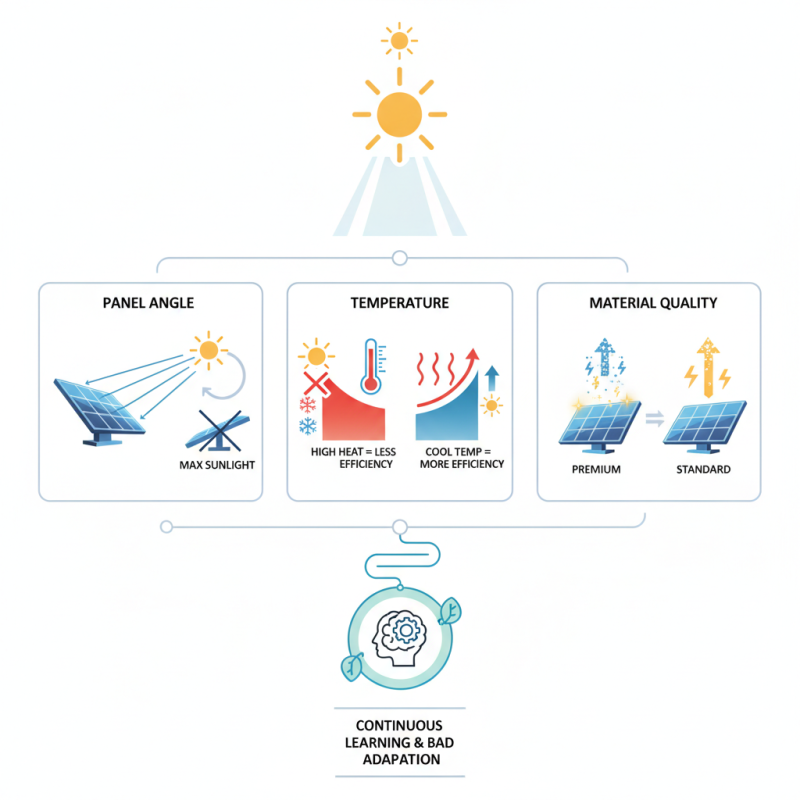
The efficiency of solar power systems is influenced by several pivotal factors. Dr. Emily Carter, a renowned expert in renewable energy, states, "Understanding what affects solar power efficiency the most is crucial for optimizing performance." This highlights the importance of specific variables in harnessing solar energy effectively.
One key factor is the angle of solar panels. Properly positioned panels receive maximum sunlight, significantly boosting energy capture. Additionally, temperature plays a critical role. High temperatures can reduce a panel's efficiency, serving as a reminder of nature’s unpredictability.
Moreover, the quality of materials used in solar panels directly impacts conversion rates. Not all panels are created equal, and slight variations can affect overall output. For many, grasping what affects solar power efficiency the most is an ongoing journey. It requires continuous learning and adaptation to environmental changes. In our quest for cleaner energy, acknowledging these complexities is essential.
Factors Influencing Solar Panel Efficiency: An Overview
Solar panel efficiency is influenced by various factors. One major aspect is the material used in the panels. According to the National Renewable Energy Laboratory, monocrystalline panels typically reach efficiencies of around 20-25%. In contrast, polycrystalline panels hover between 15-20%. This discrepancy can lead to significant differences in energy production over a panel's lifespan.
Temperature is another critical factor. As solar panel temperatures rise, their efficiency drops. Studies show that for every degree Celsius increase, efficiency can fall by about 0.5%. This implies that in hotter climates, performance may not meet expectations. Dust and debris can also affect efficiency. Clean panels can produce up to 25% more energy than dirty ones.
Finally, installation angle and shading play essential roles. Panels oriented towards the sun perform better. Researchers found that a tilt angle too steep or too shallow can reduce energy capture. Shading from trees or buildings can drastically cut output. Understanding these factors can help maximize solar power systems. Yet, not all installations achieve their potential. Monitoring and adjustments are crucial for optimal results.
Solar Irradiance Levels and Their Impact on Performance
Solar irradiance levels significantly influence the performance of solar power systems. These levels, measured in watts per square meter, determine how much solar energy is available for conversion into electricity. Research indicates that optimal solar panel performance occurs with irradiance levels around 1000 W/m². However, real-world conditions often vary widely.
In many regions, the average solar irradiance is substantially lower than expected. For instance, some areas may experience average levels of only 600 W/m². This variation can lead to inefficiencies in power output. Additionally, localized weather patterns can cause fluctuations in sunlight exposure. Clouds, haze, and atmospheric pollution can reduce irradiance dramatically, affecting energy production.
Moreover, the angle and orientation of solar panels also play a crucial role. Panels installed with the wrong tilt may not capture irradiance effectively, leading to suboptimal performance. A study showed that a 10-degree tilt variance can decrease efficiency by up to 20%. Such discrepancies highlight the importance of careful installation and site assessment in maximizing solar power efficiency.
What Affects Solar Power Efficiency the Most? Factors to Consider - Solar Irradiance Levels and Their Impact on Performance
| Factor |
Description |
Impact on Efficiency (%) |
Optimal Range |
| Solar Irradiance |
The amount of solar energy received per unit area. |
15-25% |
800-1000 W/m² |
| Temperature |
Influences the efficiency of solar cells; higher temperatures typically reduce efficiency. |
-10-15% |
25°C to 45°C |
| Angle of Incidence |
The angle at which sunlight strikes the solar panel surface. |
5-20% |
0° (perpendicular) to 30° |
| Humidity |
Affects solar irradiance by scattering sunlight. |
-5-10% |
20% to 60% |
| Shading |
Obstructions can greatly reduce the amount of sunlight to solar panels. |
30-100% |
None to partial shading |
| Panel Age |
Older panels may show reduced efficiency over time. |
-1% per year |
New to 25+ years |
Temperature Effects on Solar Cell Efficiency: Key Data Insights
Solar power efficiency heavily relies on various factors, with temperature being one of the most critical. High temperatures can significantly impact solar cell performance. As temperatures rise, the voltage produced by solar cells tends to drop. For instance, an increase of 1°C can decrease efficiency by about 0.5%. This is crucial data for anyone considering solar installations in warmer regions.
Tips: Consider the placement of solar panels. Installing them with proper airflow can mitigate overheating. Keeping panels clean also helps maintain efficiency.
Moreover, the materials used in solar cells contribute to their thermal response. Some materials may degrade or lose efficiency more quickly than others under high temperatures. Understanding the thermal properties of different solar technologies is essential.
Tips: Regular monitoring can help identify performance issues. Also, exploring options like cooling systems may enhance efficiency in extremely hot climates. Remember, all solar panels will have limitations, and addressing temperature impacts is key to maximizing energy output.
Material Composition of Solar Panels and Its Efficiency Metrics
Material composition plays a crucial role in determining solar panel efficiency. Different materials have unique properties that affect how sunlight is converted into electricity. Most commonly, silicon is used, but variations exist, including monocrystalline and polycrystalline types. Monocrystalline panels are more efficient due to their higher purity. However, they come with a higher cost.
Other materials, like thin-film technologies, offer flexibility. These panels are often lighter and can be integrated into building materials. Nevertheless, their efficiency is typically lower than traditional silicon panels. The trade-off between efficiency, cost, and application suitability requires careful consideration.
Tips: When choosing solar panels, prioritize their efficiency ratings. Check if they match your energy needs. A higher efficiency might save space and ultimately costs. Monitor the environmental conditions of your installation site. Shadowing or extreme temperatures can affect performance. Balancing these factors ensures optimal energy conversion from sunlight.
System Design and Orientation: Maximizing Solar Energy Capture
When designing a solar power system, orientation plays a crucial role. The ideal placement of panels directly affects energy collection. South-facing installations in the Northern Hemisphere receive the most sunlight. However, this might not be feasible for every location. Adjusting angles can also impact efficiency.
Consider the tilt as well. The angle should complement your geographic location. For instance, areas with high latitudes may require a steeper tilt. Yet, not everyone can invest time in perfect adjustments. In some cases, just focusing on another nearby installation could yield better results.
Additionally, shading is a factor often overlooked. Trees and structures can hinder sunlight exposure. Regularly assessing surroundings might lead to necessary changes. Perhaps trimming trees could enhance energy capture. Engaging with the environment is essential for optimization. Sometimes, small adjustments can lead to substantial gains in solar efficiency.
FAQS
: Monocrystalline panels are more efficient, reaching 20-25%. Polycrystalline panels are less efficient, at 15-20%.
Higher temperatures decrease efficiency. An increase of 1°C can lead to a 0.5% drop in performance.
Clean panels can produce up to 25% more energy than dirty ones. Regular cleaning is essential for optimal performance.
Panels must be oriented towards the sun. A tilt that's too steep or shallow can reduce energy capture significantly.
Yes, shading can drastically cut energy output. Regularly checking surroundings may reveal ways to improve sunlight exposure.
Regular monitoring helps identify issues. Checking for dirt, damage, or shading can lead to necessary adjustments for better efficiency.
In extremely hot climates, cooling systems may enhance efficiency. It’s an option worth exploring to mitigate temperature effects.
The tilt angle should suit your area. High latitude locations may need a steeper angle for maximum sunlight capture.
Not every location allows for perfect orientation. Sometimes, focusing on another nearby installation can yield better results.
Yes, minor changes like trimming trees can lead to substantial gains in solar capture. Engaging with the environment is crucial.
Conclusion
The efficiency of solar power is influenced by several key factors that collectively determine its performance. Among these, solar irradiance levels play a crucial role, as the amount of sunlight received directly affects energy output. Additionally, temperature variations can significantly impact solar cell efficiency, with higher temperatures often leading to reduced performance. The material composition of the solar panels themselves also contributes to efficiency metrics, as different materials have distinct energy conversion capabilities.
Another vital aspect is the system design and orientation, which can maximize solar energy capture by ensuring that panels are positioned optimally relative to the sun. Understanding what affects solar power efficiency the most is essential for designing effective solar energy systems. By considering these factors, stakeholders can enhance the overall performance and reliability of solar power installations.
 Wing Solar
