As we approach 2026, the conversation around solar energy continues to grow. Many people see solar power as a clean and renewable alternative to fossil fuels. However, it is essential to address its drawbacks. What are the disadvantages of solar energy? Understanding these limitations is crucial for informed decision-making.
Solar energy systems can be expensive to install. Despite decreasing prices over the years, many households struggle with the initial costs. Maintenance and repair can also add to the overall expense. Furthermore, not every location is suitable for solar panels. Areas with high cloud cover may not reap the benefits. This can limit accessibility for some communities.
Moreover, solar energy relies on sunlight availability. During winter months or cloudy days, energy production can decrease significantly. This dependence can lead to energy reliability issues. Additionally, the production of solar panels poses environmental concerns. Toxic materials used in manufacturing can be harmful. These factors remind us that while solar energy holds promise, it is not without challenges.
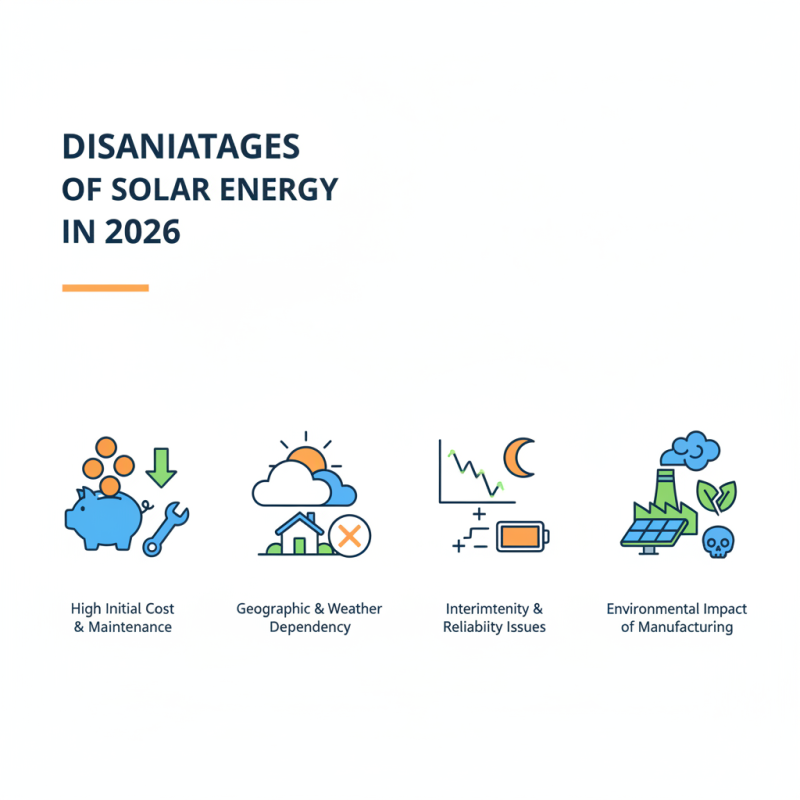
Disadvantages of Solar Energy: An Overview
Solar energy has become a popular choice as a renewable resource. However, it is not without its drawbacks. One significant issue is the high initial installation cost. According to the National Renewable Energy Laboratory, residential solar panel systems can range from $15,000 to $25,000. Many homeowners find the upfront investment daunting, even with potential incentives.
Another concern is the reliance on sunlight. Solar energy generation dips at night and on cloudy days. This intermittency can lead to inconsistent energy supply. A study from the International Energy Agency reported that solar-only setups require effective energy storage solutions. Without batteries or alternative sources, energy shortages can occur, raising doubts about reliability.
Additionally, solar panels often have environmental costs. Manufacturing and disposal can involve hazardous materials. The Solar Energy Industries Association notes that recycling programs are still developing. Thus, potential pollution and waste management issues remain unaddressed. The long-term impacts of solar energy on our ecosystems need further exploration. Balancing these downsides with the benefits is key to understanding its role in a sustainable future.
High Initial Costs of Solar Energy Systems
The high initial costs of solar energy systems remain a significant barrier to widespread adoption. According to the U.S. Department of Energy, the average installation cost for solar photovoltaic (PV) systems can range from $15,000 to $25,000. This upfront investment deters many potential users. For some homeowners, the financial burden can be overwhelming, even with incentives and tax credits offered.
Moreover, the average payback period for solar systems can extend beyond 7 to 10 years. Market data suggests that while solar energy lowers utility bills over time, the long-term savings do not always justify the initial expense. In certain cases, individuals may find themselves waiting a decade before seeing a return on investment. This situation can lead to skepticism surrounding the overall benefits of solar energy.
Additionally, installation costs can vary widely based on local regulations and labor expenses. Some regions may impose higher requirements for permitting, which can escalate costs further. As the solar market grows, understanding these economic challenges is crucial. Potential users must weigh the high barrier of entry against future savings carefully.
Intermittency and Reliability Issues of Solar Power
Intermittency and reliability are significant challenges of solar power. Solar energy generation depends heavily on sunlight, which is not always available. During cloudy days or at night, energy production drops dramatically. This inconsistency can disrupt power supply, affecting both residential and industrial users. It creates a gap that traditional power sources need to fill.
Energy storage solutions, like batteries, can help mitigate intermittency. However, these systems often come with high costs and environmental concerns. Current battery technology may not be sufficient for prolonged outages. This limitation can lead to reliability issues, especially in regions with frequent cloudy weather or during the winter months.
In addition, the solar infrastructure itself can be costly to maintain. Solar panels degrade over time, which affects their efficiency. Homeowners and businesses may face unexpected expenses for repairs or replacements. This reality raises questions about the long-term viability of solar power as a stable energy source. Planning for these factors can help ensure a more reliable solar energy future.
Environmental Impact of Solar Panel Production
When examining the environmental impact of solar panel production, it's essential to consider several critical factors. The manufacturing process involves significant energy consumption, which can lead to a notable carbon footprint. A 2021 report highlighted that producing a typical solar panel generates approximately 90 kg of CO2 emissions. This figure raises concerns about the sustainability of solar energy, especially when scaling up production to meet growing demand.
Moreover, the materials used in solar panels pose additional environmental challenges. Rare metals, such as cadmium and tellurium, are often required for thin-film solar cells. Mining these resources can disrupt ecosystems and pollute local water supplies. A study from the National Renewable Energy Laboratory indicated that large-scale solar farms might require over 800,000 tons of raw materials annually. This demand stresses the importance of recycling and finding alternative materials to minimize ecological damage.
Lastly, the disposal of solar panels at the end of their life cycle remains a pressing issue. Currently, only about 10% of solar panels are recycled, leaving the majority to contribute to waste. With an expected increase in panel installations, the volume of discarded panels may soar in the coming years. Addressing these challenges is crucial for enhancing the overall sustainability of solar energy.
Space and Land Use Constraints for Solar Installations
As solar energy gains momentum, space and land use constraints emerge as critical issues. Large solar installations require significant land, which can disrupt local ecosystems. In many cases, prime agricultural land is repurposed for solar farms. This can pose a dilemma, as food production is essential for communities.
Moreover, finding suitable locations presents challenges. Urban areas often lack available space, leading to reliance on suburban and rural landscapes. Stakeholders must navigate zoning laws and land-use policies, adding layers of complexity. High-density regions may prioritize structures over solar fields, leaving developers in a bind.
Tips: Consider integrating solar panels on rooftops. This strategy maximizes existing structures without consuming new land. Combining solar with agriculture, known as agrivoltaics, could offer a balanced solution. Both solar energy and food production can coexist with smart planning.
Thoughtful site selection is vital. Assessing land attributes ensures solar installations don’t harm biodiversity. Engaging with local communities early in the process can help align interests. Recognizing the limits of solar energy's land use is crucial for sustainable development.
Maintenance and Long-Term Performance Challenges
Solar energy is often praised for its environmental benefits, but maintenance and long-term performance present significant challenges. Research indicates that about 80% of solar panel failures are due to faulty installations or lack of maintenance. Dust, debris, and environmental factors can accumulate on panels, reducing efficiency by up to 25% if not cleaned regularly. This highlights the importance of consistent upkeep to maintain optimal energy production.
Moreover, solar panels have a lifespan of approximately 25 to 30 years, but their performance can degrade over time. Studies show that the efficiency of photovoltaic systems can decline by about 0.5% to 1% annually. This gradual loss means that owners may need to factor in eventual replacements or upgrades. Neglecting these aspects can lead to decreased returns on investment, raising concerns about the overall sustainability of solar energy systems in the long run.
While solar energy reduces reliance on fossil fuels, its practical challenges cannot be overlooked. Maintenance costs, which can average $300 to $500 annually, must be considered in financial planning. Owners must balance these ongoing expenses against the benefits of clean energy. Ignoring maintenance can lead to costly repairs and diminished energy output.
Disadvantages of Solar Energy You Need to Know in 2026
| Disadvantage |
Description |
Impact Level |
Mitigation Strategies |
| High Maintenance Costs |
Solar panels require regular cleaning and inspections to maintain efficiency. |
High |
Implement routine maintenance schedules and use automated cleaning systems. |
| Performance Degradation |
Solar panels can lose efficiency over time, typically around 0.5% to 1% per year. |
Medium |
Choose high-quality panels and monitor performance regularly. |
| Weather Dependence |
Solar energy production can be significantly affected by weather conditions. |
Medium to High |
Incorporate energy storage solutions to buffer against variable weather. |
| Land Use Issues |
Large solar farms require significant amounts of land, which can impact local ecosystems. |
High |
Evaluate land use carefully and consider dual-use solar installations. |
| Initial Installation Costs |
Solar panel installation can be expensive upfront, despite long-term savings. |
High |
Explore financing options and government incentives to offset costs. |
FAQS
: The high installation cost is a significant disadvantage. It can range from $15,000 to $25,000 for residential systems.
Solar energy production relies on sunlight. It decreases at night and during cloudy weather, causing inconsistencies.
They need effective energy storage solutions. Without batteries, energy shortages can occur, affecting reliability.
Yes, manufacturing and disposal may involve hazardous materials. This raises potential pollution and waste management concerns.
Producing one solar panel generates approximately 90 kg of CO2 emissions, raising sustainability questions.
Rare metals required for panels can disrupt ecosystems. Mining these materials might also pollute local water sources.
About 10% of solar panels are recycled. This leaves most panels contributing to waste at end-of-life.
As installations increase, the volume of discarded panels is likely to soar, raising waste management issues.
Conclusion
As we look towards 2026, it's crucial to understand what are the disadvantages of solar energy, which can impact its adoption and effectiveness. One major concern is the high initial costs associated with solar energy systems, which can deter potential users despite long-term savings. Additionally, the intermittency and reliability of solar power can pose challenges, as sunlight availability varies throughout the day and across seasons, leading to potential energy shortages.
Moreover, the environmental impacts of solar panel production cannot be overlooked, as the manufacturing process involves the use of hazardous materials. Further complicating the situation are the space and land use constraints for solar installations, particularly in densely populated areas. Lastly, regular maintenance and long-term performance challenges may arise as systems age, affecting overall efficiency. Understanding these factors is essential for making informed decisions about transitioning to solar energy.
 Wing Solar
